

Death Howl – Game Review
While I’m hesitant to bring up marketing decisions for a game in a piece of criticism, there is little escape from Death Howl’s “A Soulslike Deckbuilder” subtitle. This invitation to comparison dangles beneath nearly every instance of the game’s name and sets it apart from the deluge of roguelike deckbuilders coming out every day. So what makes a game a Soulslike deckbuilder anyway?
The Soulslike moniker—its most blunt definition being, “like Dark Souls”—doesn’t neatly translate from third-person melee action to a turn-based strategy card game. Mechanically, Death Howl feels more like a blend of Slay the Spire and Into the Breach. Combat plays out on a grid where you spend five mana points per turn to reposition your character and play cards. The depth of the game builds from that simple premise, with ways to change the cost of a card, restore mana points within a turn, or even play cards that let you reposition for free. Most cards have methods of damaging the enemies or defending yourself, with the goal being to dispatch all of the enemies on the grid before your own health reaches zero.
The Dark Souls inspiration of Death Howl comes through more in the framework between combat and exploration as well as the design philosophy of the combat encounters. Structurally, the game has you walking around an overhead 2D environment until you come upon pathways blocked by the combat grid and a handful of enemies. Once you step into the grid, combat begins. Each enemy you dispatch awards a soul, an experience point that can be spent on the skill tree or new cards. Die in combat and you drop all of your souls, which must be retrieved by returning to the fight. Sound familiar?
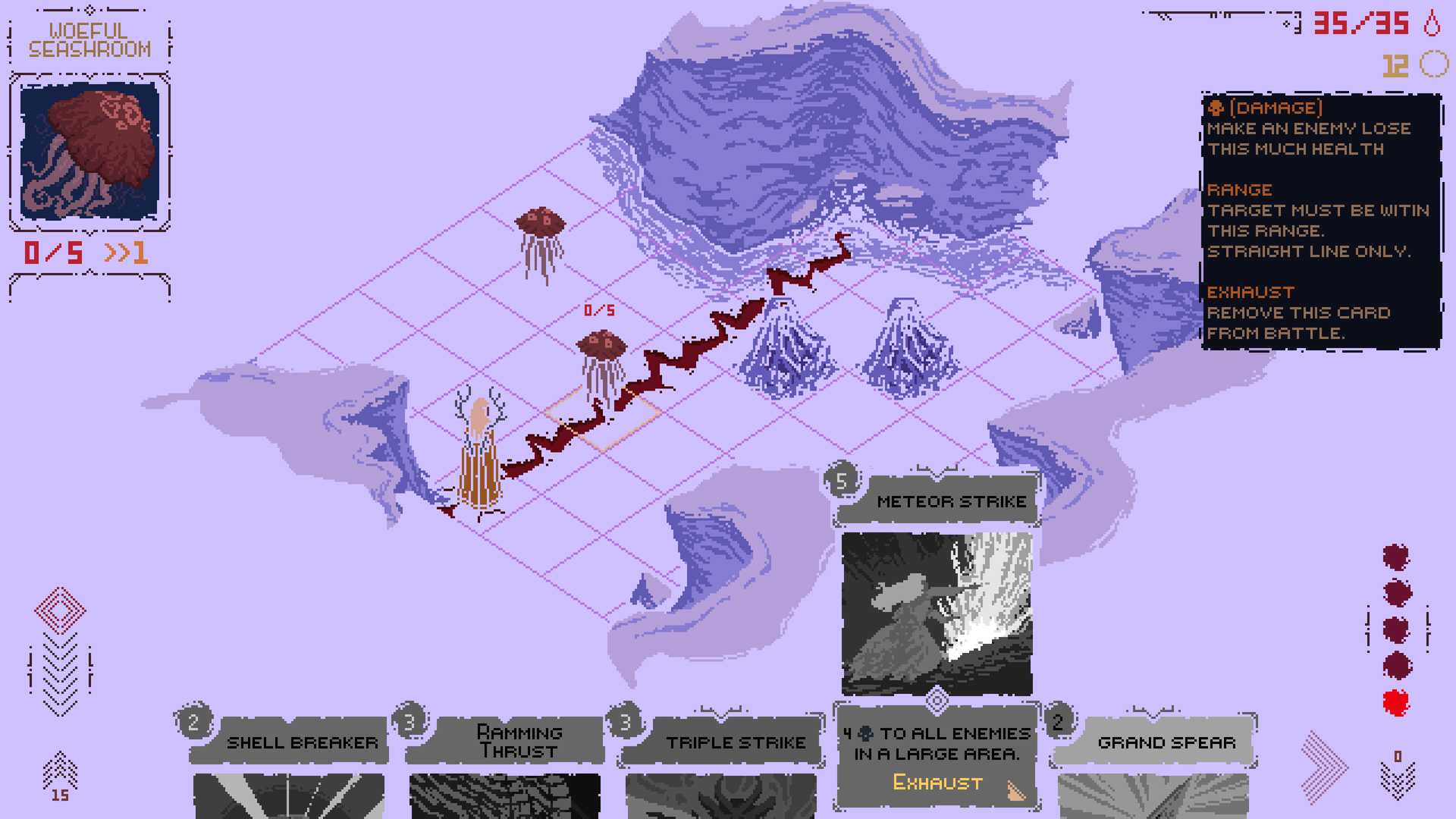
One bit of grace is that failure in Death Howl doesn’t knock you back to a previous rest point. Instead, you return just outside of the fight with the same amount of health that you had before the fight started. Only by going to a rest point and restoring yourself to full health do the various enemy encounters in the world refresh.
This is probably important for the player’s sanity early on, because Death Howl can be brutally difficult. Fail to respect a low health enemy you’ve already fought a dozen times and you’ll see a cascading sequence of pain fall upon you. There were so many times playing Death Howl where I didn’t consider my cards or positioning carefully enough, made a mistake, and found myself poisoned, bounced from one enemy to the next, and dead within the blink of an eye.
The early game can be particularly cruel. You won’t have a lot of card variety to work with until you win fights. You’ll need even deeper progress to unlock nodes in the skill trees. The ability to stack powerful charms and skills can require a lot of grinding. I found the mid-early hours of Death Howl to be the least enjoyable. The first area is tuned for newcomers, but after that the game gets brutally difficult until you can build out an arsenal. Deckbuilding, strategic positioning, and a deep understanding of each enemy are key to making progress. Those who excel in card games and find themselves easily breaking Magic the Gathering, Inscryption, or Balatro will likely have a much easier time in these early hours.
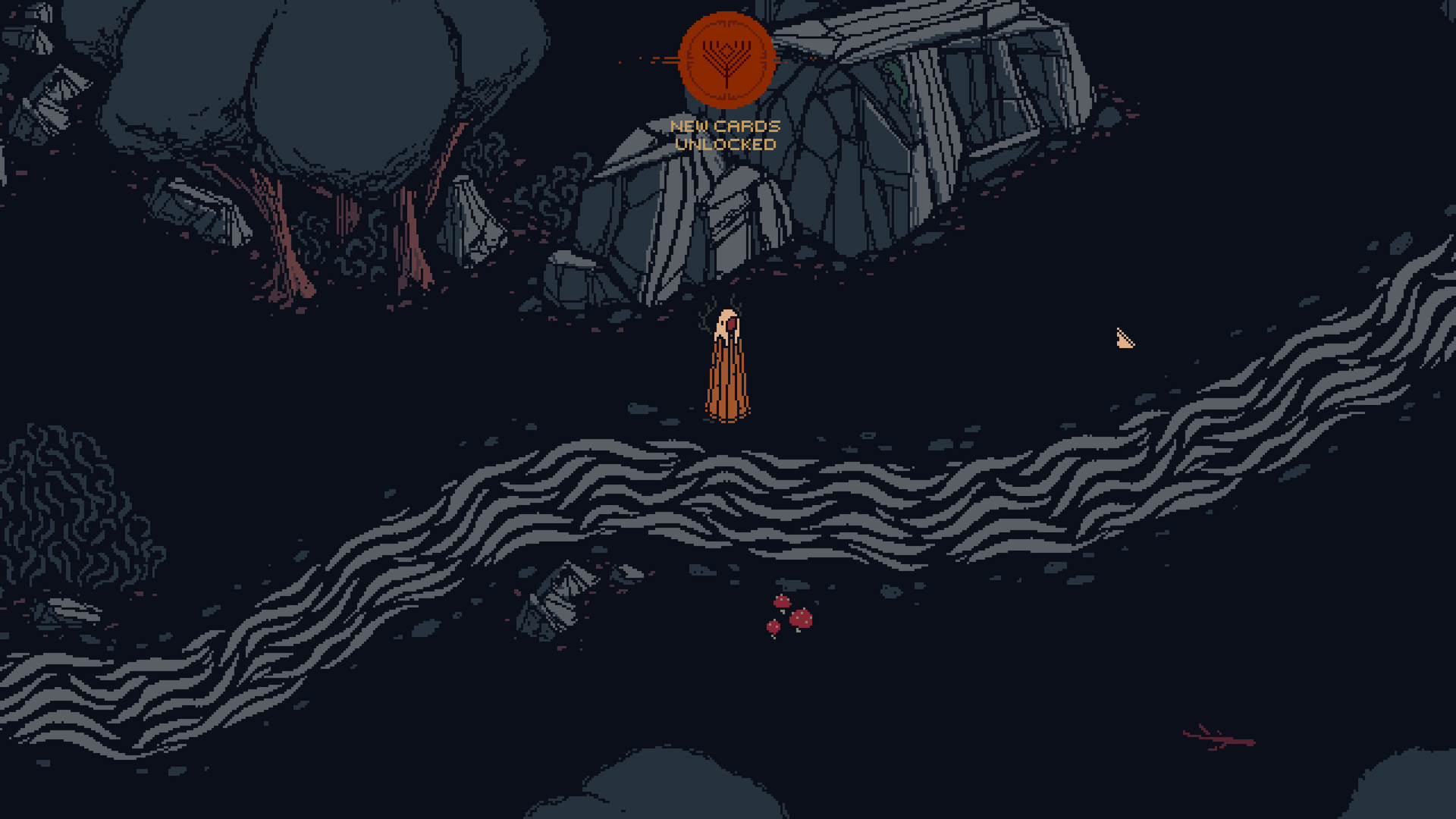
Thankfully, I found the learning curve to be well-worth the effort. The vast majority of Death Howl falls into that realm of “tough-but-fair” and provides a ton of interesting tools to keep the game interesting. One of the more brilliant design decisions is to tie card themes to specific areas of the world. While the core starter cards never change, each of the four major areas have their own set of cards that cost more to use in the three other regions. While this may sound limiting, it’s actually a rather brilliant design choice if you’ve ever found yourself finding that one broken build that you abuse in a game from beginning to end.
By the end of my roughly 40 hours with the game I designed around a dozen different decks. Each region has enough cards and unique mechanics that I imagine two players making a deck only using cards meant for that region will still use completely different cards and build into different strategies.
Even though I don’t consider myself much of a deckbuilding/strategy savant, I was still able to craft decks that felt incredibly powerful. And, I should mention, with very little direct guidance! Death Howl is so elegantly designed that it teaches most of its mechanics through play and experimentation.
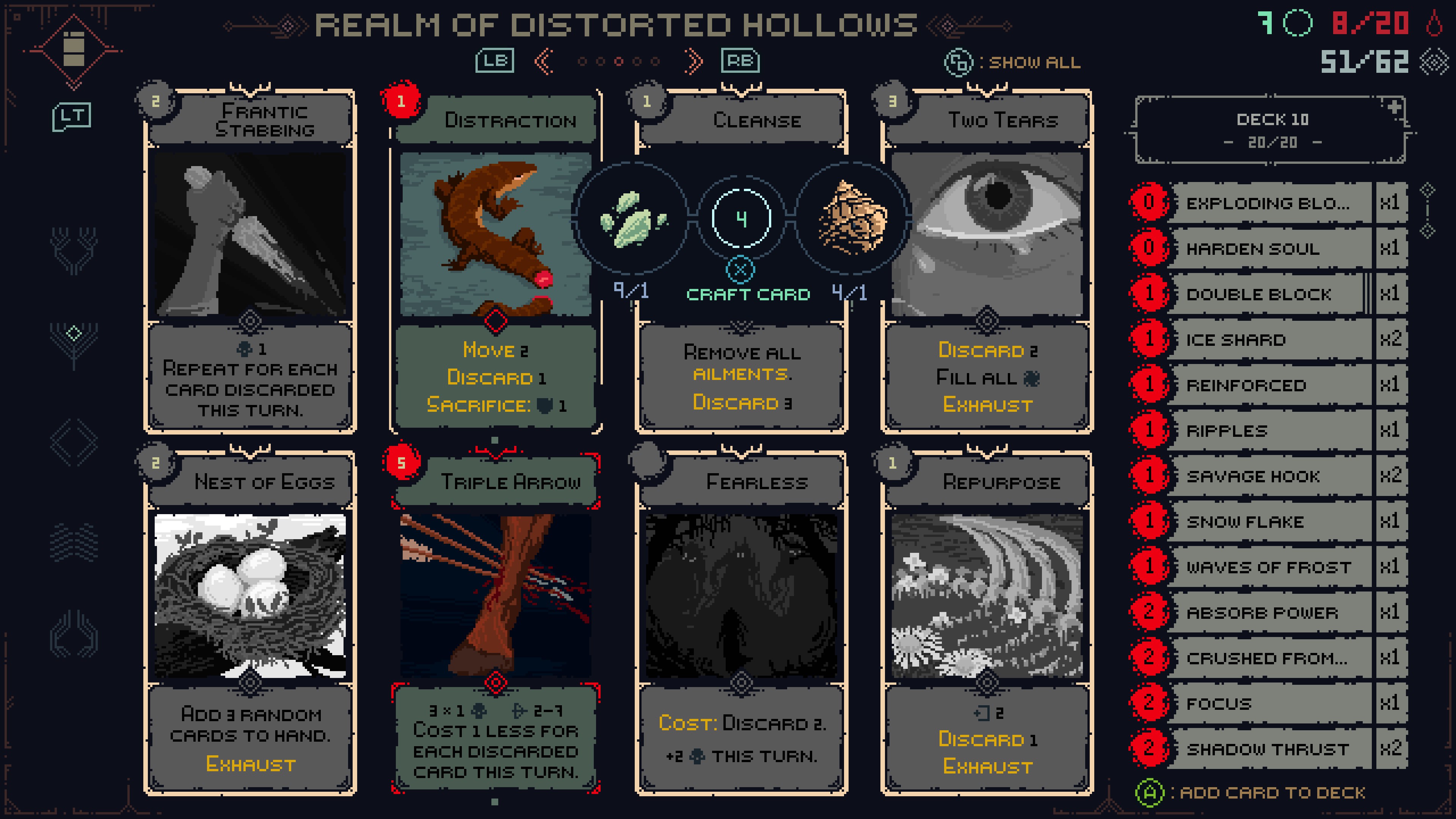
More than once I built a deck that could take my measly five mana points and turn that around into a seemingly endless single turn of destruction. Much like how pattern recognition, build-crafting, and reflexes can turn an impossible Dark Souls boss into a no-hit cakewalk, I found myself taking initially impenetrable fights in Death Howl and breaking them over my knee.
The other important element of Death Howl’s “Soulslike Deckbuilder” tagline is what it omits. This isn’t a rogue-like game, meaning there isn’t any kind of aggressive reset mechanic that forces you to start the game over from the beginning or go on multiple runs. There is a clear point-A-to-point-B progression here that—outside of the initial grinding that can be a chore—ensures that most of the game is a fresh experience.
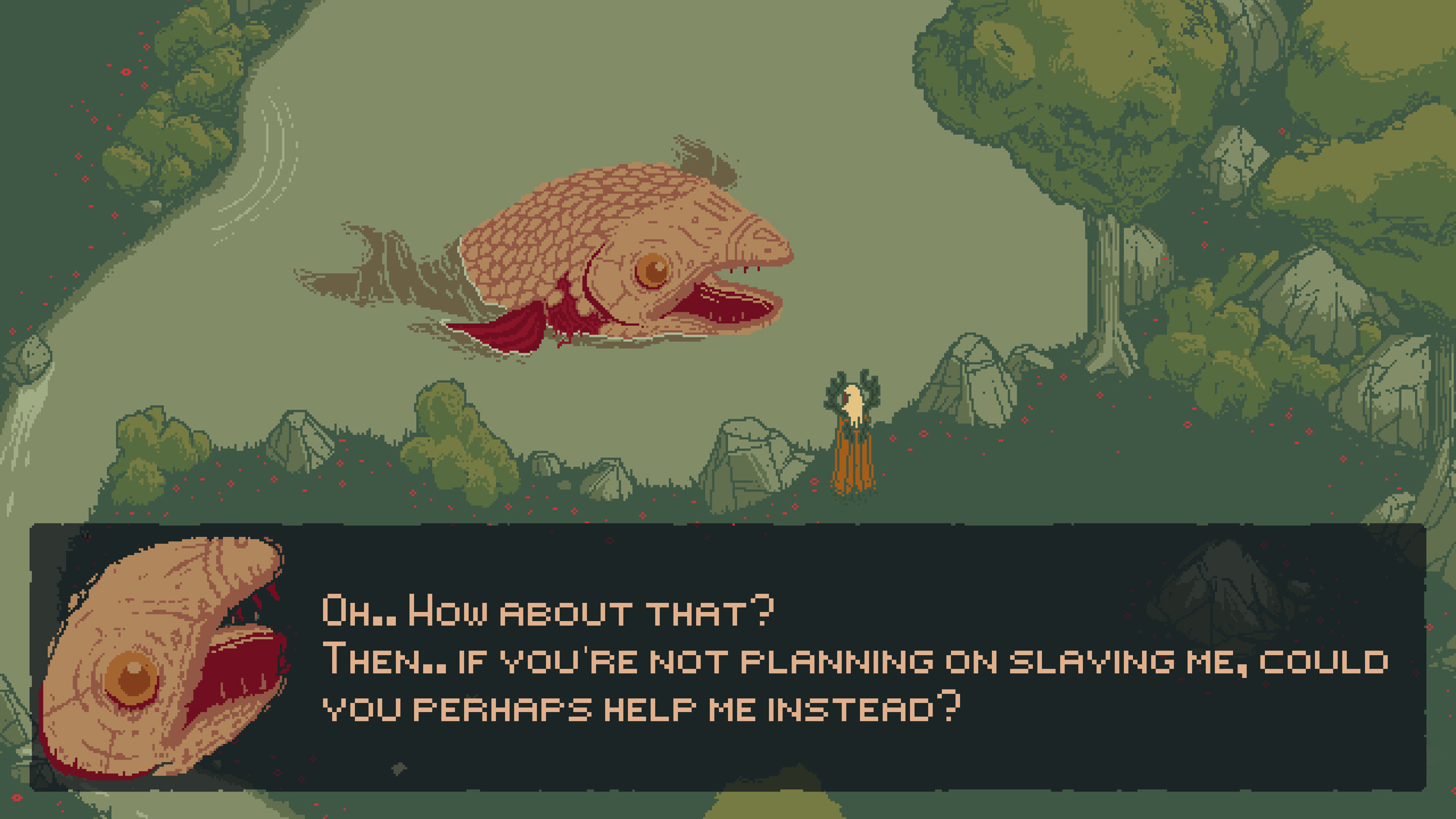
It also gives Death Howl the freedom to tell a linear tale. Despite all the mechanics I discussed, Death Howl makes its first impression through beautiful pixel-art visuals and a compelling story. You play as Ro, a woman who has lost her son and ventures into the spirit realm to get him back. I hesitate to say more, as the dream-like way the story unfolds kept me guessing throughout.
You never really know where a story beat will happen, and I found small cutscenes and character beats off in secret caves and edges of the map. As a result I found it easy to explore every single corner of the map, complete every side quest, and exhaust every last morsel of gameplay I could find.
One of the reasons I’ve been harping on the “Soulslike” tagline so much in this review is how Death Howl made me feel through its playtime. I originally bounced off of the first Dark Souls. It took years before I gave it a fair shake, and when it finally grabbed me I devoured every similar game I could find. If I hadn’t chosen to review Death Howl and stick with it, the friction I felt in those opening hours may have resulted in a similar bouncing off.
Not every moment of Death Howl is a blast. It has plenty of irritating fights. But, as I built my repertoire of cards and started to feel mastery over the game, the highs started to outshine the lows. By the end I barely remembered being annoyed with it at all. The struggle was absolutely worth it.
Death Howl is an elegantly designed game that rewards your persistence. It keeps the deckbuilding elements fresh from beginning to end, forcing you to adjust your strategy in each new area and boss encounter. Topping it all off is an intriguing story and beautiful pixel art. If you’re the kind of person who enjoys a game with a clear beginning, middle, and end, It’s a complete package—one that, despite some slow progress early on, had me riveted to the very end.

