
Blue Prince – Game Review
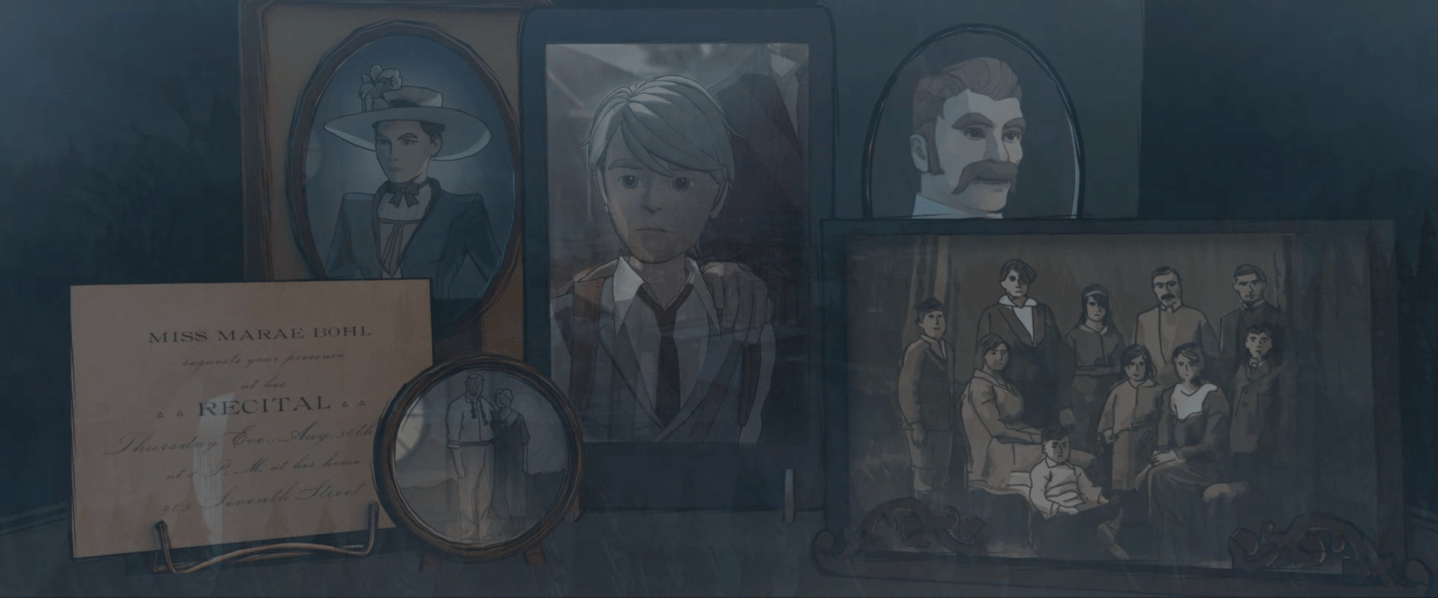
Blue Prince is a labor of love eight years in the making. It is a first-person puzzle game in the vein of The Witness or The Talos Principle with a board-game-inspired, rogue-like twist. You play as a young boy who inherits his uncle’s mysterious mountain estate. However, in order to truly claim it, he must figure out how to reach the mysterious Room 46.
The house is arranged in a 9×5 grid. When you enter the foyer you are greeted with a letter from your uncle and three closed doors. By interacting with a door, three options for new rooms appear. You can draft a variety of rooms like simple hallways, a kitchen, living room, and much more. Each room has its own arrangement of doors leading in and out, items to find, and inherent powers. Each day, the whole house resets and you build it all over again. The end result is a really unique genre mash-up: an architectural deck-building rogue-like puzzle game.
There are many ways to fail in Blue Prince. Some rooms are dead-ends, and early on you’re likely to learn the hard way how easy it is to trap yourself. Additionally, there are resources in the form of steps, keys, and gems. Each time you enter a new room, one of the 50 steps you start with is consumed. This is your energy for the day, and running out of steps will mean forfeiting your run to start again the next day. There is also a random chance that doors may be locked and need a key to open. Lastly, higher quality rooms with more features and doorways tend to cost some gems, so you may get stuck drafting a dead end if you have zero gems to spend on a particular room.

This is the devious and brilliant core structure of Blue Prince. Like many games of chance, runs can extend far longer than expected or wrap up abruptly at the worst possible moment. Crushing disappointment and wild, fist-pumping achievement are two ends of the spectrum that you’ll encounter frequently from the first few hours all the way through Blue Prince’s elaborate endgame.
This has been a fast turn-off for many players who jumped in after the early hype. There are tips and tricks to help influence the random chance of the game and achieve your goals, but it is also possible to simply have bad luck, and not see a particular item in a particular run when you need it. Take the magnifying glass for example. It’s almost a spoiler to say there is a magnifying glass in the game because some people have gone in-game weeks without seeing it, yet this item is incredibly important when combined with certain books and notes all over the estate. There will be many times where you draft a room with a note that needs it, but never find the magnifying glass. There will be many times where you get a magnifying glass but fail to draft the room you need.
I’d love to know if creator Tonda Ros put some kind of bad luck protection in the game, or if it is as simple as a bunch of probabilities playing off of each other. There have been days in Blue Prince where I got down to a single step remaining, and then went on to keep drafting for another ten rooms thanks to a lucky few items. There were also several times where I found the path to Room 46 and then couldn’t reach it because of dead ends or a lack of resources.
Those low points are often mitigated by some small discovery. There are so many small upgrades, little notes, or new things to notice in the estate that you’re bound to get something out of almost every run, even if it isn’t as exciting as the goal you made for that run. The failures and lack of progress can—if you are wired for it—motivate you to think outside the box or try to look at a room in a different way.

That said, while I found the path to Room 46 exhilarating, and the subsequent post-game spider web of additional secrets very intriguing, I also discovered my biggest criticisms with the game after almost 60 hours of chipping away at it. I played another 30 hours from there and hit a logical stopping point (with the knowledge there were at least another 30 hours of secrets out there), and decided I never wanted to look at Blue Prince again.
Perhaps I have more patience than the folks who immediately bristled at the random elements of this game, but not as much patience as those who have scoured the darkest corners of Mt. Holly Estate. But even those that love Blue Prince end-to-end seem to talk about it with some admission of masochism.
There really is a lot to find in Blue Prince. That said, the revelations rarely match the amount of work it takes to puzzle them out. I’ve heard people compare this game’s scope to Elden Ring, and that is a wild overstatement of what is happening here. That scope implies you’ll eventually escape the randomly generated estate. That maybe, just maybe, there is a train out of there to a whole new location of puzzles.

Instead, discoveries come at a drip-feed pace. A big revelation in Blue Prince tends to be a new drawer with a new note in it, or a false wall that reveals a small upgrade instead of a new secret area to explore. A few reveals are bigger than that, but Blue Prince always feels like hours of drafting the house for the reward of a new 30-second-long discovery.
When you consider how much the game relies on random chance and certain stars aligning in order to solve puzzles, that pace starts to feel really unhealthy. I can frankly say I had an addiction to Blue Prince for a bit there. There were many times where I no longer enjoyed the game, but kept pressing on because I felt like I was on the cusp of a big discovery. My hands were cramped from constantly jamming on the left trigger to toggle the run button. The “Day 100, 110, 120” intro and the walk to the initial doors to start drafting filled me with repulsion.
There were some times where I was frustrated playing The Outer Wilds, but I finished that game and cried with joy at the end. I did everything there was to do in The Witness and that journey (despite Jonathan Blow’s idiocyncracies) was incredibly rewarding from start to finish. By the time I decided to uninstall Blue Prince I’d played it for far more hours than either of those games, had so much more left to solve, and never wanted to look at it again. I uninstalled it in a fit of disgust.
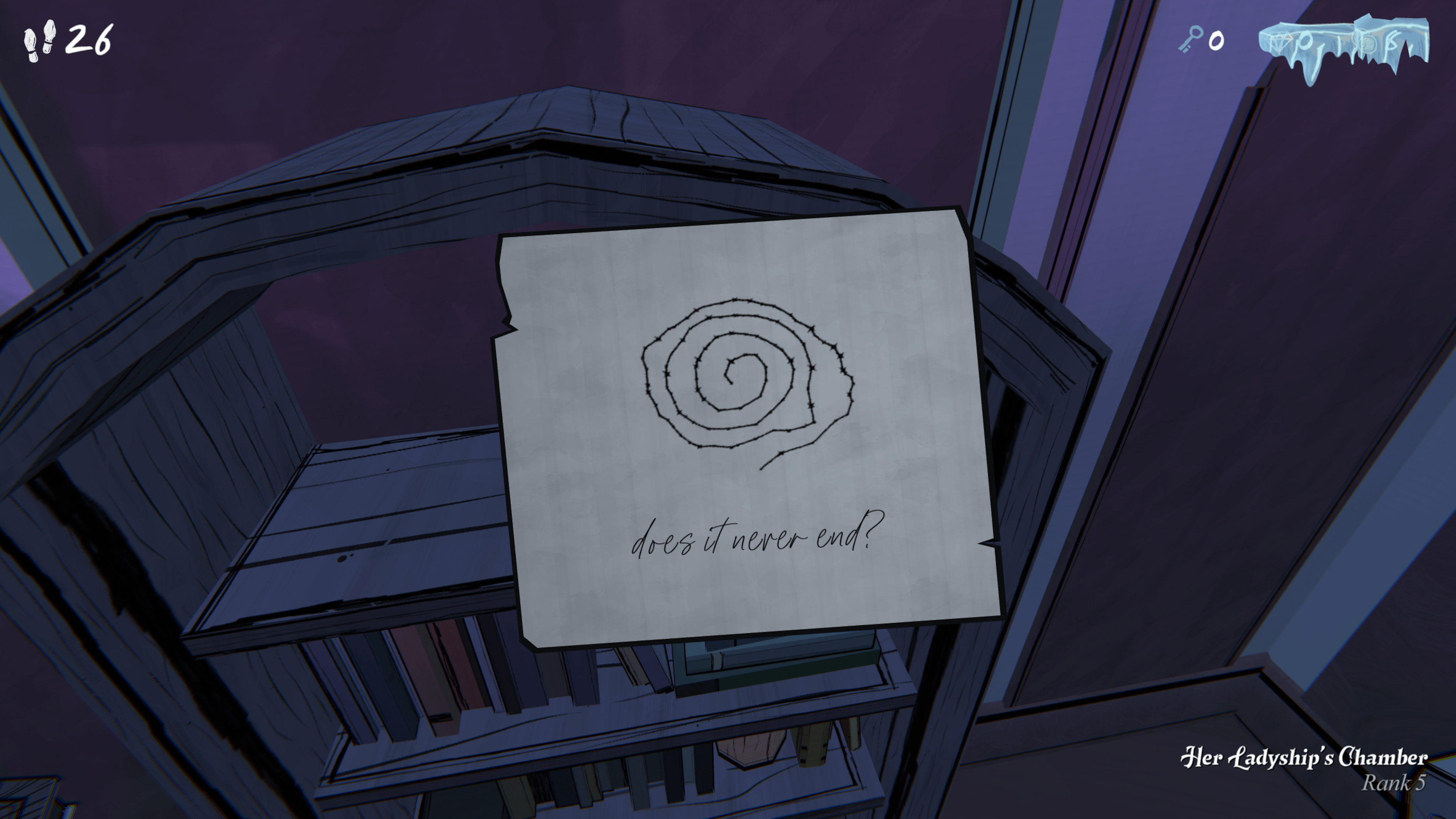
I think a lot of people like how fucked up this game is. I think it is designed that way intentionally. Tonda Ros has more or less said as much. And ultimately, I think adjustments that strip away the random chance elements of the game could really fly in the face of the intended design. That said, a game that was half as long, with just as many secrets and revelations, would have been closer to the masterpiece many have already claimed it as. A game that eventually empowered the player with more permanent upgrades to mitigate the random chance would have felt a lot less like a prison full of slot machines.
So, do I recommend Blue Prince? I might never want to look at it again, but I still think it’s a brilliant game in a lot of ways. Just know what you are getting into, and be willing to tap out or look up hints as soon as it no longer feels fun. If I stopped at Room 46 I think Blue Prince would have been a 10/10, perfect game.
It’s just diminishing returns from there.
 Red Ring Circus