

Because sometimes you want to talk about 21 games of the year instead of 10
It’s been quite the year for games, but you wouldn’t know if you only read RedRingCircus. My writing here has been quite sporadic, to the point where every scroll of the mousewheel is about a year of content on the homepage.
I know if I wrote more (and more consistently) I’d grow a larger audience. There is a lot of marketing 101 that I just don’t do here, and that’s kind of by design. If I write about a game here it’s because I think it’s fascinating and worthy of attention (Indika, Slitterhead), or a code was provided and I’m dedicating my time to a thorough review (Home Safety Hotline, Wizardry). The last reason is my one piece of true consistency: the end-of-the-year favorites list.
I finished a ton of games this year! The final number is looking like it will be 61, which is the most I’ve completed in a year since 2016. I have a couple of annoying gaps, but I’ve decided I feel good about the top 10 I’m headed towards writing, and because I played a lot, I have an additional 11 games I want to talk about for various reasons.
I don’t want to call these honorable mentions, because this isn’t “my top 11-21 of 2024” or anything like that. These are simply eleven other games I played beyond my top 10 that I really want to say something about, either because they didn’t come out in 2024; they are interesting in other ways; or in a couple cases, they barely dodged my actual top 10.
The big top ten list will be published soon! I’m trying to be timely this year, partly because I’m tired of scrambling to finish games every January, and partly because I want to start playing like 1000 hours of Yakuza/Like a Dragon in 2025.
Astro Bot

The darling of many game’s journalists in 2024 was a delightful platformer full of callbacks to old Playstation games. It’s Astro Bot! You may have heard of it, it just won Game of the Year at Geoff Keighley’s big Video Game Awards show. It’s kind of a big deal, so I don’t think it’s hurting anyone to say this game has some really big wow moments but disappointed me overall.
It’s easy to say lots of nice things about this game. It’s beautiful, it’s cute, it has some crazy deep cuts referencing old Playstation franchises that Sony seemingly wants nothing to do with otherwise, and it feels as good to control as a 3D Mario game. Nowhere is that more clear than in the game’s DLC time trial levels, which stripped out enemies and combat in favor of pure platforming skill. Every level came with its own gimmick ability, like a rocket boost or the power to make ice blocks, but they were always in service of an ingeniously-designed obstacle course. I lost as many hours to the time trials as I spent playing the main game, and if that kind of design was core to Astro Bot, it would have certainly made my top 10 list.
Unfortunately the main game is more of a slow-paced treasure hunt jam-packed with one-hit-kill enemies and weak combat mechanics. There is one enemy design that is so infuriating I almost gave up entirely because it was so deeply unfun to deal with. Almost every platforming challenge late in the game features this asshole that winds up a big spitball to shoot you just as you reach the end of your jump. That was the worst of them, but in general I found the combat to be phenomenally irritating, unavoidable, and completely counter to the joy of everything else about the game.
If Team Asobi ever makes another Astro Bot sequel, I sincerely hope they cool it with the lame enemies or simply give our hero a health bar.
Doom (as part of the Nightdive Doom 1+2 remaster)
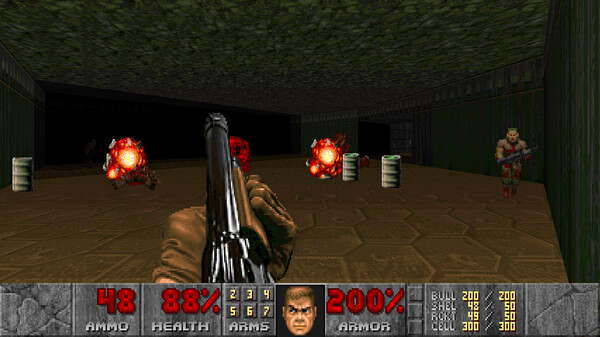
Did you know Doom is really good? In my heart I knew this to be true. I have played the first dozen or so levels of Doom countless times over the years, but I never played it all the way through. When Doom was mentioned in hushed tones alongside the likes of Mario and Zelda as one of gaming’s core masterpiece efforts, I didn’t disagree, but I certainly took it for granted.
But no, Doom is incredible. It’s a total masterpiece. Every minute of the game is designed to be engaging and satisfying. It has the best shotgun in video games. The levels are clever and full of rewarding secrets to find. The escalation in difficulty and enemy density is perfect and measured.
Nightdive deserves some credit here as well because Doom has never felt better to play on a controller in front of a 4K TV and game console. This is a beautiful collection full of impressive extras and cool features, absolutely worthy of your time.
Doom 1 though? The very first one? They hit a homerun off of the first pitch. Playing through multiple Doom games via this remaster, what I came to learn (and was the most surprised by) is just how much better Doom 1 is compared to Doom 2. They made the exact same mistakes back in 1994 as they made with Doom Eternal in 2020, complicating the formula and filling it to the brim with gimmicks and half-cooked ideas.
Mars After Midnight

I probably laughed more playing Thank Goodness You’re Here! this year, but Mars After Midnight got a few of the biggest laughs out of me thanks to its physical humor.
Being a Playdate game, I suspect many people haven’t played or even heard of this game. Mars After Midnight is the work of developer Lucas Pope, known primarily for Papers, Please and Return of the Obra Dinn. His latest is a light-hearted, empathetic spin on Papers, Please, with the player taking on the role of coordinator for various late-night alien support groups. Using the Playdate’s crank, d-pad, and two buttons, you must split duties between manning the front door and cleaning up the snack table.
Success means ensuring that everyone who tries to come in for the themed meeting actually needs the support. For a Cyclops Anger Management session, for example, that might involve giving each alien who comes knocking a careful look for extra eyeballs. Some aliens are just knocking to see if they can get some free food, so you have to be careful to ensure a productive meeting.
The minigame of examining various aliens and keeping the snack table organized is never particularly challenging here, and it isn’t supposed to be. Mars After Midnight is instead an ode to this weird little handheld, showcasing the simple joy of play, displaying the best visuals and audio the tiny screen can handle, and presenting it all in a complete package that oozes with charm. Playdate is too expensive to justify buying for a single game, but if you had to make that case, the game is probably Mars After Midnight.
Dragon’s Dogma 2

I didn’t enjoy the original Dragon’s Dogma. Perhaps it was the rough launch and the fact that many who loved it played it in the form of an improved re-release, Dragon’s Dogma: Dark Arisen. It could have been my build (an attempt to make Tyrion Lannister from Game of Thrones) that made every journey incredibly slow and arduous. Or, it could have simply been the fact that I hadn’t played Demon’s Souls or Monster Hunter and I wasn’t ready for Dragon’s Dogma’s friction and deliberate pacing. Either way, it didn’t work for me at the time, but it compelled me enough that a sequel felt like the perfect chance to give it another shake.
Either I’m more primed to appreciate this kind of game, or Dragon’s Dogma 2 is simply more approachable. I couldn’t be sure without going back to the original and giving it a fresh look. It’s been over a decade since I played the first game and all I remember is the line, “Even in numbers a weakling is a weakling still.” Regardless, I was having a great time with Dragon’s Dogma 2 from the very beginning. It felt like everything that didn’t work in the original game was singing here. For the first 10-15 hours it was destined for my top 10 list at the end of the year.
Unfortunately, Dragon’s Dogma 2 is not 10-15 hours long, and for another 20-30 hours I saw the same huge monsters, the same goblin ambushes, and the same roadways over and over again. All the novelty that Dragon’s Dogma 2 offers at the start ends up feeling like smoke and mirrors.
Early on it feels like a game that is doing fresh, new, dynamic things that have never been accomplished in a game before. A bridge collapses. You back a cyclops off the edge, but they catch themselves and get stuck hanging by their hands and feet, forming a new bridge with their back for you to pass. That should be an incredible, once-in-a-playthrough moment that blows your mind. But it keeps happening over and over. Eventually you realize there are always cyclops hanging out near the bridges that are prone to collapse. This bespoke, magic moment is no different from climbing the countless towers of any tired old Ubisoft open world game.
Black Myth Wukong
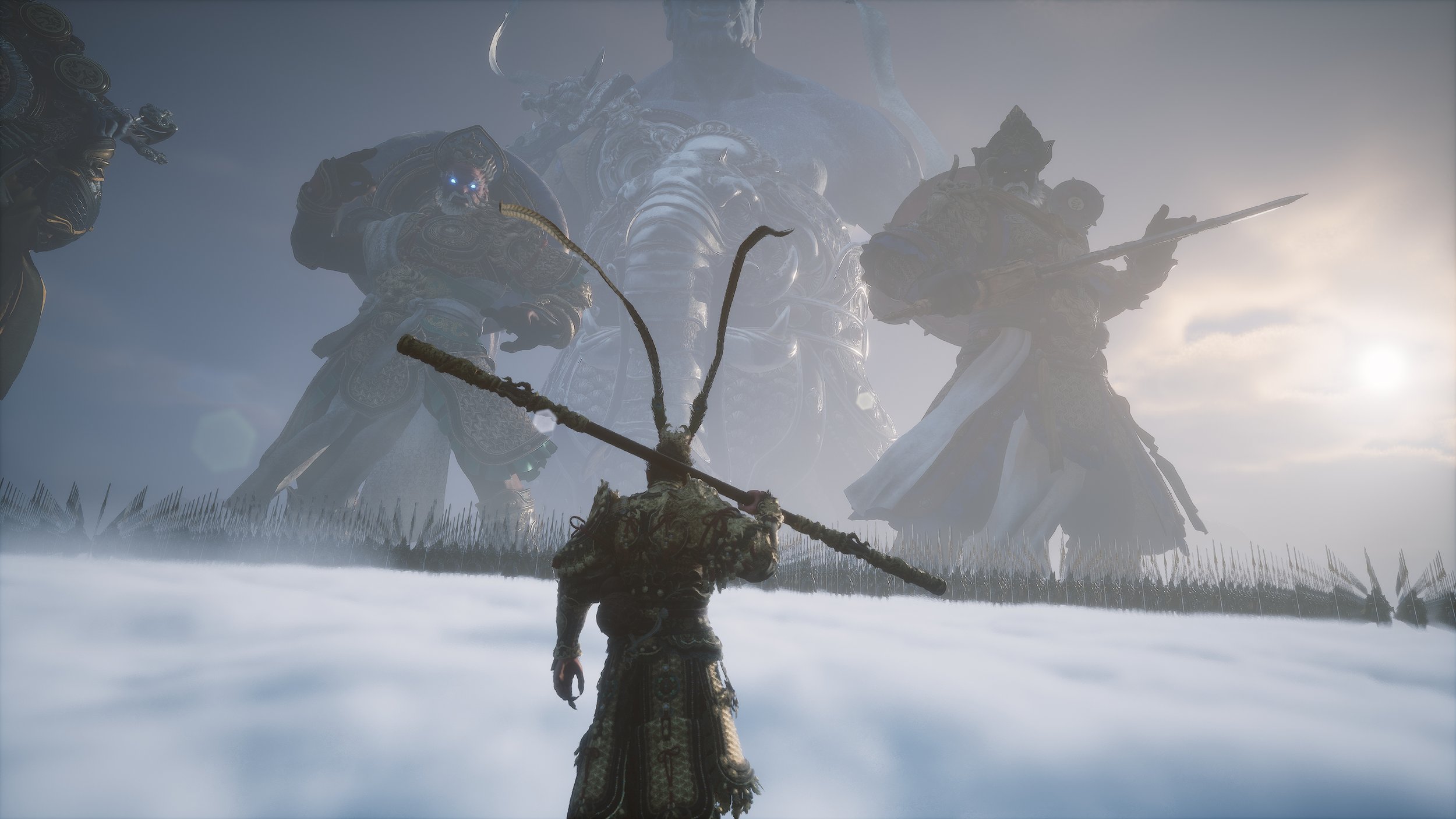
Has any above-average, 7-to-8-out-of-10 game had as much hot air blown over it as Black Myth Wukong? It’s a big accomplishment for the team at Game Science, as it feels like China’s first big splash into mainstream triple-A games. It was hyped from the moment it was announced and sold incredibly well at launch. The “anti-woke” gamergate weirdos propped it up as some sort of true gamer’s game, mostly out of convenience—after all, no one was demanding inclusion out of a centuries old story about a monkey man. And it seemed to take The Game Awards hostage, getting several nominations despite ranking fairly low down the list of best reviewed games of 2024. In the words of Peter Griffin, Black Myth Wukong insists upon itself. At least, that’s what it feels like from the outside.
Actually playing the game is an entirely different story. It’s a fairly middle-of-the-road Souls-like with a lot of depth stripped out in favor of flashy combos. It’s pretty hard at times, but most of the time you’re either mashing on the attack button, mashing on a forgiving dodge button, or piling on a bunch of magic attacks to eat through boss health bars. I would describe the truly challenging moments as poorly considered difficulty spikes in a game that is mostly just a fun, casual time.
A lot of love went into it, but not always in the right places. Technical performance is a mess, some chapters are sprawling open zones that go on for far too long, and enemy variety and placement can get pretty exhausting at times. On the other hand, the game has many lavish cutscenes (some hand-drawn), it is full of worthwhile optional content, and it has some wild cinematic moments reminiscent of Asura’s Wrath or Bayonetta.
At the end of the day I would have preferred something closer to Asura’s Wrath or Bayonetta across the board. Especially with such a mythical, over-the-top story, it feels weird when the game comes out of these insane, epic moments and focuses much of the playtime on muted, deliberate, Dark Souls-inspired combat.
Slitterhead

I wrote a lot about Slitterhead pretty recently, so I won’t spend too much time going over it again here, but I feel like it’s worth including in this list. When I looked into it and learned that Slitterhead was the work of developers behind the original Silent Hill, the Siren series, and Gravity Rush, it all started to make sense. It’s a game that combines body horror monster design and a rain-slicked 1990s Hong Kong with a refreshing combat system and exciting chase sequences.
Let me paint a scene.
You control a spirit who can bounce from body to body in a bustling city. Any random pedestrian can be a Slitterhead in hiding, and when their slithering tentacle head explodes from the neck of a shirtless drunk in an alley, they make a run for it. This starts a chase in which you pursue them by throwing yourself from one innocent bystander to the next. As it rounds a corner, you possess a little old lady and surprise club it in the face. It takes off to the rooftops and you send grandma leaping impossibly high onto neon signs after it. As it realizes it’s cornered, it transforms into a massive beast. You call for help. Your duo of higher-powered rare humans come to your aid with a slew of random people from the city. Suddenly you are jumping from one character to the next, using their special abilities to take down the Slitterhead in a combination of character-action combat and RTS game the likes of which haven’t been attempted since Brutal Legend.
The creativity is through the roof in Slitterhead. Unfortunately, the ideas weren’t met with the development time needed to support a 14-20 hour long game. Only a handful of environments and enemy designs are present, and those get recycled over and over to tell a Groundhog Day-esque time travel story over the course of 3 ever-repeating days. The developers clearly knew they didn’t have a lot to work with and it comes through in the story they tell, but Slitterhead severely overstays its welcome and becomes a repetitive slog well before the credits roll.
Witch N’ Wiz and Evercade
Witch N’ Wiz is a puzzle game released in 2021 and capable of running on an NES. It is far from a 2024 game, but I wanted to talk about it because it ended up being a pretty delightful doorway into the Evercade ecosystem. I had heard of Evercade for what felt like years but never really put together what it was. This year ended up being a good time to learn more about it, as the platform grew with a new home console, handheld, and a tabletop arcade machine.
The idea behind Evercade is to curate retro and indie releases into affordable packages that make collecting fun without breaking the bank. Evercade cartridges come in cases reminiscent of the old Sega Genesis clamshells with full color manuals. They typically house between 2 and 10 games, depending on the scope of the collection. Most of the cartridges work interchangeably between the handheld, console, and arcade machine, and they cost between $20-25.
It’s a very boutique platform, and surely not for everyone, especially when you can grab a handheld with thousands of games installed on it for $60-80. For myself it made sense and seemed fun because of the curation. I would never have played a game like Witch N’ Wiz normally, but because it was part of one of the more recommended Evercade cartridges, I ended up trying it.
I’m kind of blown away by how simple this game is, while remaining challenging and entertaining throughout. You are a witch, and you have to navigate 2D mazes to defeat all the enemies by running into them. It’s essentially a block pushing game like Sokoban, and the premise is heavily inspired by another old game called Catrap. It’s easy to make a mistake and get stuck, so the game features a rewind mechanic allowing you to undo mistakes and try a new angle.
UFO 50
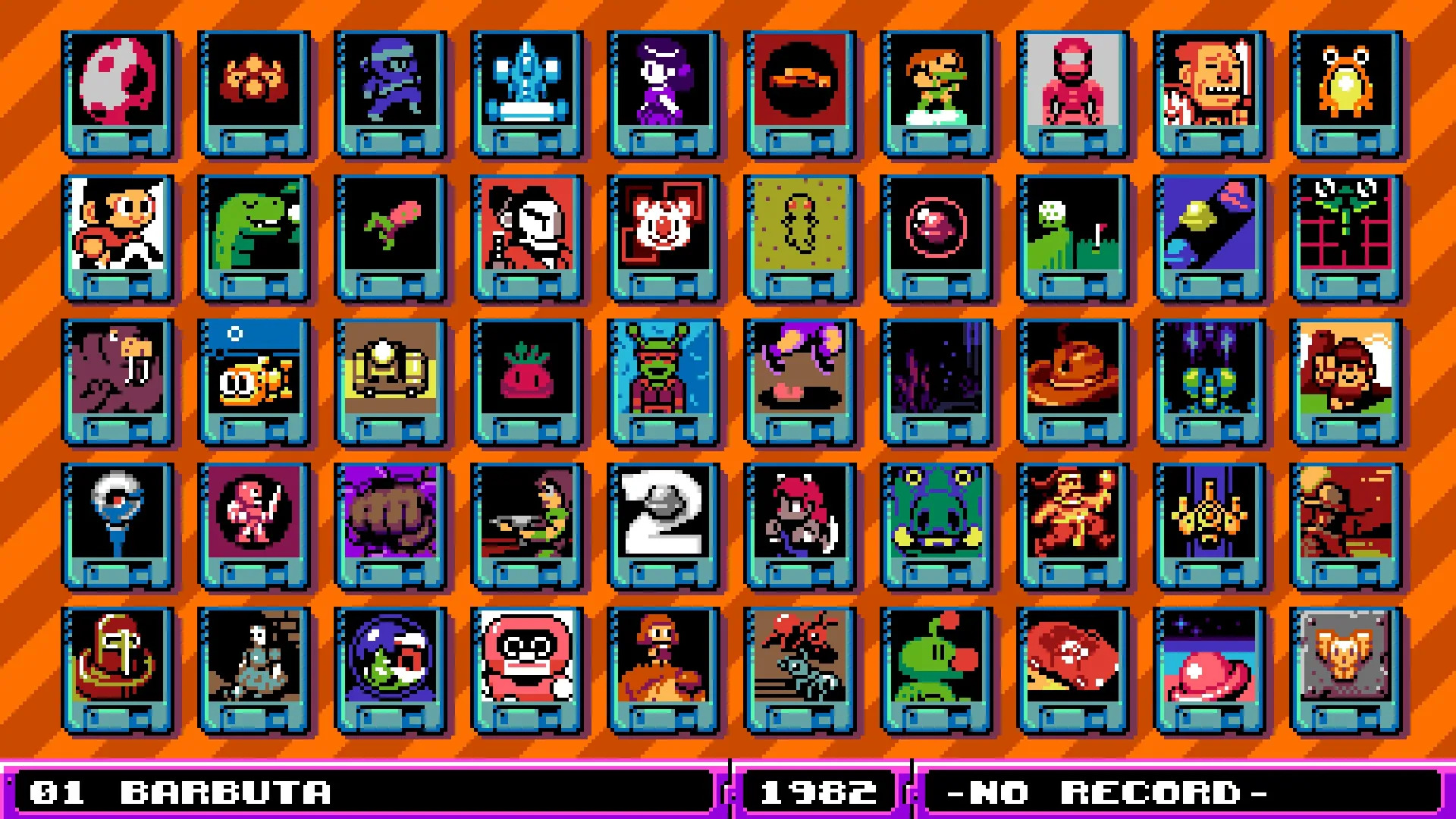
UFO 50 is basically the Twin Peaks: The Return of video games. It is an impossible thing. It is a product and piece of art that exists only because clout and prior sales success allowed true artists to step outside of the bounds of capitalism and do something ambitious and crazy without worrying about failure. After all, who among us could realistically make a game that is itself 50 entire video games and think that is a smart financial endeavor? Who would make an 18-hour movie and call it a major television event?
In my last entry I talked about Witch N’ Wiz, a simple NES-style puzzle game that’s deceptively challenging and entertaining. That game features dozens of puzzle levels across multiple worlds with cool gimmicks to keep things fresh. Imagine if that was only one of 50 games within UFO 50 and you have a sense of the scope here.
The premise of the game imagines a development studio in the 80s that made a bunch of different games over the years. UFO 50 itself is meant to be like a modern day museum-esque collection of all of these games with little blurbs about each game’s development and the fictional teams behind them. It also displays the games in sequential order, so the earlier games are more graphically simplistic and feature more arcade-like gameplay. Eventually you start coming across sequel games and mascot characters that show up again and again.
There is some lore to unpack if you pay attention within the margins, but it is mostly just fun to explore such a vast collection and bounce from game to game. Some of my favorites so far have been games I can see myself returning to and completing. The idea of finishing all 50 games seems a little too ambitious, and part of why it isn’t in my actual top 10 is that I just don’t have time for it all!
Concord
Sony’s efforts to pretend Concord never happened are surprisingly effective because I almost forgot to include it in this list. I wrote a lot about the experience of enjoying Concord at a time when everyone was loving to hate it, and those feelings haven’t changed. The game has been unreleased, the studio dissolved, and most records of it have been scrubbed from digital stores and console dashboards. The last reminder of its existence will likely be the Secret Level episode, which I frankly thought was pretty good.
And now, despite everything that was said about how hero shooters are washed up, one of the biggest games in the world right now is Marvel Rivals, a brand new hero shooter. It’s obvious that there was never only one thing about Concord that caused it to fail, but there was one thing that caused it to succeed for a couple weeks: it was really fucking fun to play.
At this point I don’t expect anyone to agree or change their mind, but I had a real blast playing Concord with my little group of believer friends. I believed it had the foundation for a truly great game that could have built an audience, but it came out in an environment that has no patience for that. The gaming landscape that cultivated long-term success stories out of short-term failures like Rainbow Six: Siege doesn’t exist anymore. It’s cheaper to write it off, fire everyone, and try to catch lightning in a bottle with the next team and multi-year project. Sad times.
Destiny 2: The Final Shape

The story of Destiny 2 and Bungie is a story of wild ups and downs. From layoffs, downsizing, acquisition, mismanagement, and a game that’s currently riddled with glitches and controversies, it’s hard to remember that just a few months ago Destiny 2 was the best it has ever been. The Final Shape was pitched as an expansion that would compete with their best—The Taken King and The Witch Queen—and a fitting finale for the current story arc. It was supposed to do for Destiny what Avengers Endgame did for Marvel. Despite those lofty ambitions and turmoil behind the scenes, Bungie managed to pull it off spectacularly.
The Final Shape is Destiny with the guardrails removed. Every single element is ambitious in some way that shouldn’t fly in a game that’s meant to provide fresh new content every week. The new subclasses mixed elements from all prior subclasses to create a buildcrafter’s dream scenario. The new public zone surprised me for hours with new activities and secrets I hadn’t seen before. The story campaign was challenging and exciting. Every battle seemed to include some new mechanic beyond the typical popping of alien heads.
But nothing could prepare me for the grand finale of it all. After the first fireteam finished the new raid, a new mission was revealed for players to take on The Witness, the big bad of the current Destiny story. This final battle breaks all the rules. It puts you together with 12 players (6 more than any other cooperative activity in the game), includes cameos from a ton of characters throughout the Destiny story fighting alongside you, and feels truly epic in a way that Destiny has never really managed to do. It is phenomenal. I could cry just thinking about how cool it is. It’s the realized potential of what everyone always thought Destiny could be. Everything that means a lot to me about this game—the gameplay, the art design, the social element, the challenge, and the storytelling—all combine into one ambitious climax.
A lot of people have settled on that mission as the end of Destiny and their time to move on. And considering what a whimper of a story they’ve been telling with the new episodes since that came out, I can’t really blame them. I still enjoy Destiny a lot, but I can’t deny that it’s an unsustainable thing. One of the best moments of the entire year of games is a mission you play once or twice in a game that is otherwise meant to keep you occupied for hundreds of hours.
Street Fighter 6

I didn’t really give Street Fighter 6 the time of day last year because frankly I’ve bounced off of every fighting game I’ve played since the original Soul Calibur. That all changed when a friend suggested getting a regular game night together and we started practicing Street Fighter 6 in earnest.
Now I think Street Fighter 6 is the best fighting game ever made.
It is obviously building on decades of lessons, but the core systems are so thoughtful and create so much room for experts and casual players alike to appreciate it. The joy of fighting games for me is when you learn enough that you can start playing mind games with your opponents. Street Fighter games tend to put a sheer cliff of mastery in the way of that joy, requiring hours upon hours of practice just to learn very simple combos and be effective.
Street Fighter 6 still has that sheer cliff at its heart, but Capcom smartly offers up a series of pitons along the way that give newcomers something substantial to grasp onto. The drive gauge and drive impact system provides a foundational way for players to meaningfully counter their opponents and dive into the rock-paper-scissors elements of fighting games right from the start. There is so much fun to be had before you ever start talking about cancelable attacks, frame traps, and all the other jargon that has become normal in the fighting game scene.
And even if you can’t ever put in the practice to learn those tricky combos, new modern controls give players access to a little bit of that in a way that isn’t too upsetting to the hardcore audience. Street Fighter 6 is somehow a healthy and well-balanced game while offering easier controls for casual players and cultivating a huge tournament scene at the same time. It is a masterpiece from the greatest fighting game developer to ever do it, and I couldn’t be happier to include it as a regular staple of my gaming life going forward.
 Red Ring Circus