
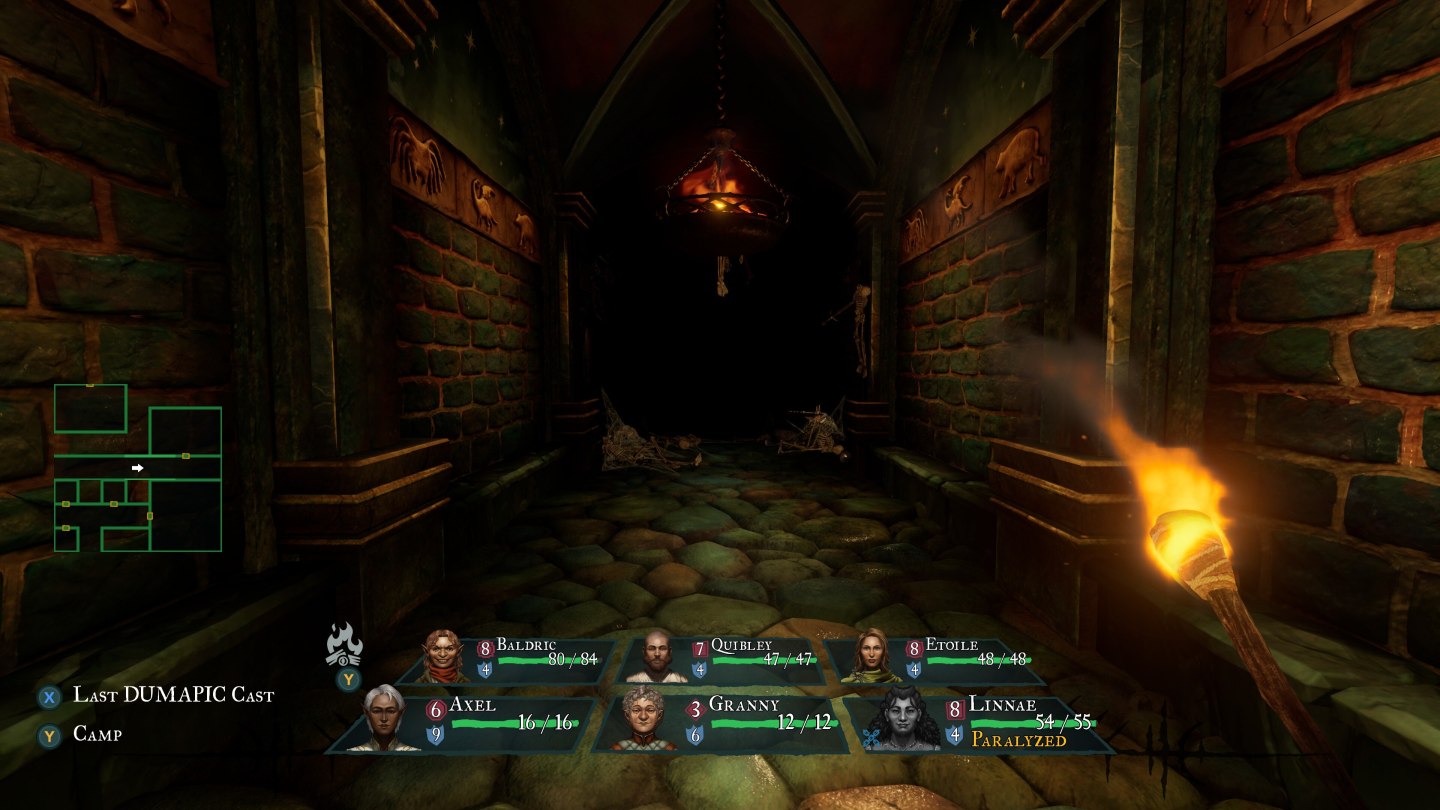
Wizardry: Proving Grounds of the Mad Overlord – Game Review
It’s hard to decide where to begin with a game like Wizardry. This dungeon crawler started life in 1981 as one of a few different attempts to bring Dungeons & Dragons to video games. It became the de facto influence for many other RPGs, particularly in Japan where it inspired Dragon Quest and Final Fantasy. Once you’re familiar with Wizardry, it’s hard to ignore its influence. Particularly today, when so many games include grinding, leveling up, and loot, Wizardry’s DNA can be felt everywhere.
For many this game is a source of nostalgia every bit as important as Mario and Zelda. For myself, Wizardry was more of a low hum in the background of my gaming experience. I’d read the name Wizardry here and there in game magazines and websites. I came to know about CRPGs (Computer Role-Playing Games) through relatively modern (but still very very old) games like Knights of the Old Republic. I dabbled with more recent dungeon crawlers like Shin Megami Tensei: Strange Journey—probably the closest I ever got to Wizardry-like gameplay without realizing it.
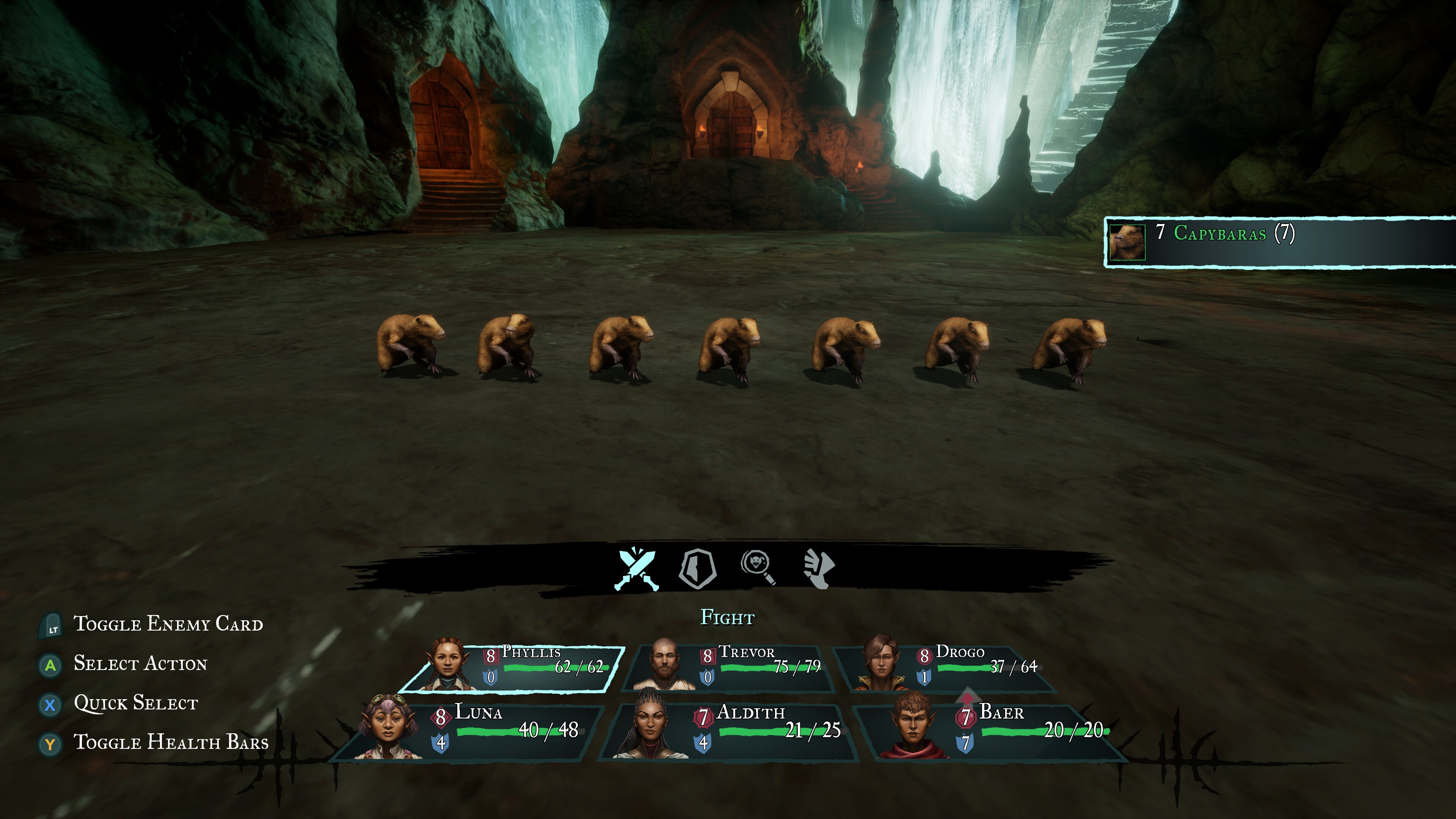
So I think I represent at least one portion of the intended audience for Digital Eclipse’s modern remaster of the first Wizardry game, Wizardry: Proving Grounds of the Mad Overlord. I’ve browsed around on the pages of GOG.com, curious about the dozens of old CRPGs that I’d never even heard of. I’ve heard podcast hosts discuss the joys of mapping dungeons in games like Etrian Odyssey and considered giving it a try. Call me dungeon-crawler-curious. I saw the trailers for the game I’m reviewing here and it seemed like the perfect opportunity to jump in.
It’s has been an interesting ride, to say the least. I don’t think I can properly describe what this version of Wizardry is without first explaining what it isn’t. For one thing, despite the recent Digital Eclipse pedigree, this game is not a museum piece like Atari 50 or The Making of Karateka. Outside of an initial note explaining their goal to bring this beloved classic to a modern audience, this is a pure remake of the game. There are no supplemental materials to be found.
And it’s not really fair to level that against the game or Digital Eclipse, but with a game like Wizardry, it’s hard to NOT remark on it. Because despite the fresh coat of paint and list of modern quality-of-life additions, Wizardry: Proving Grounds of the Mad Overlord is a cruel, punishing, baffling game that evokes some strong emotions.

At first, starting a new game with all of Digital Eclipse’s modernized settings, Wizardry felt relatively straight-forward. I explored the first floor of the dungeon, got into a few fights, ran back to the inn to rest and level up, and returned to the dungeon. Party members would die and I could revive them back in town if I had the gold. And then—after what was honestly a pretty fortunate onboarding by this game’s standards—I lost my entire party to a mob of orcs and kobolds.
There it was. Surely, that was the old-school difficulty I should expect with this game, right?
Well, no, it’s actually a lot worse than that. After a few attempts of remaking my party, leveling them to level 3 or 4, and poking my head into the second floor of the dungeon, I had little more than 18 dead party members to my name. Each attempt it felt like things were going fine until I was suddenly dead. This is a game where the early levels are jam-packed with bad luck. Everyone misses attacks constantly, and at the worst times. Running from fights is an option, but it pretty much fails 100% of the time when it matters most. Status effects can be ruinous, forcing you to return to the surface to heal, hoping you don’t get into any serious fights on the way back up. I had started a new game three or four times before wondering if I’d made a mistake in trying to review this.
That eventually led me outside of the game, out to the internet, to try to learn what Wizardry actually was. It’s hard not to see this as a lost opportunity for the game. I can’t tell you how validating it would have been to watch a 5-minute documentary of Wizardry fans waxing poetic about their early struggles with the game. Instead I referenced old guides and forum posts, learning about the game’s history, helpful hints, and notorious difficulty through outside sources. CRPG Addict in particular was a fun and cathartic read. I wasn’t crazy for struggling, but the game wasn’t going to tell me that.
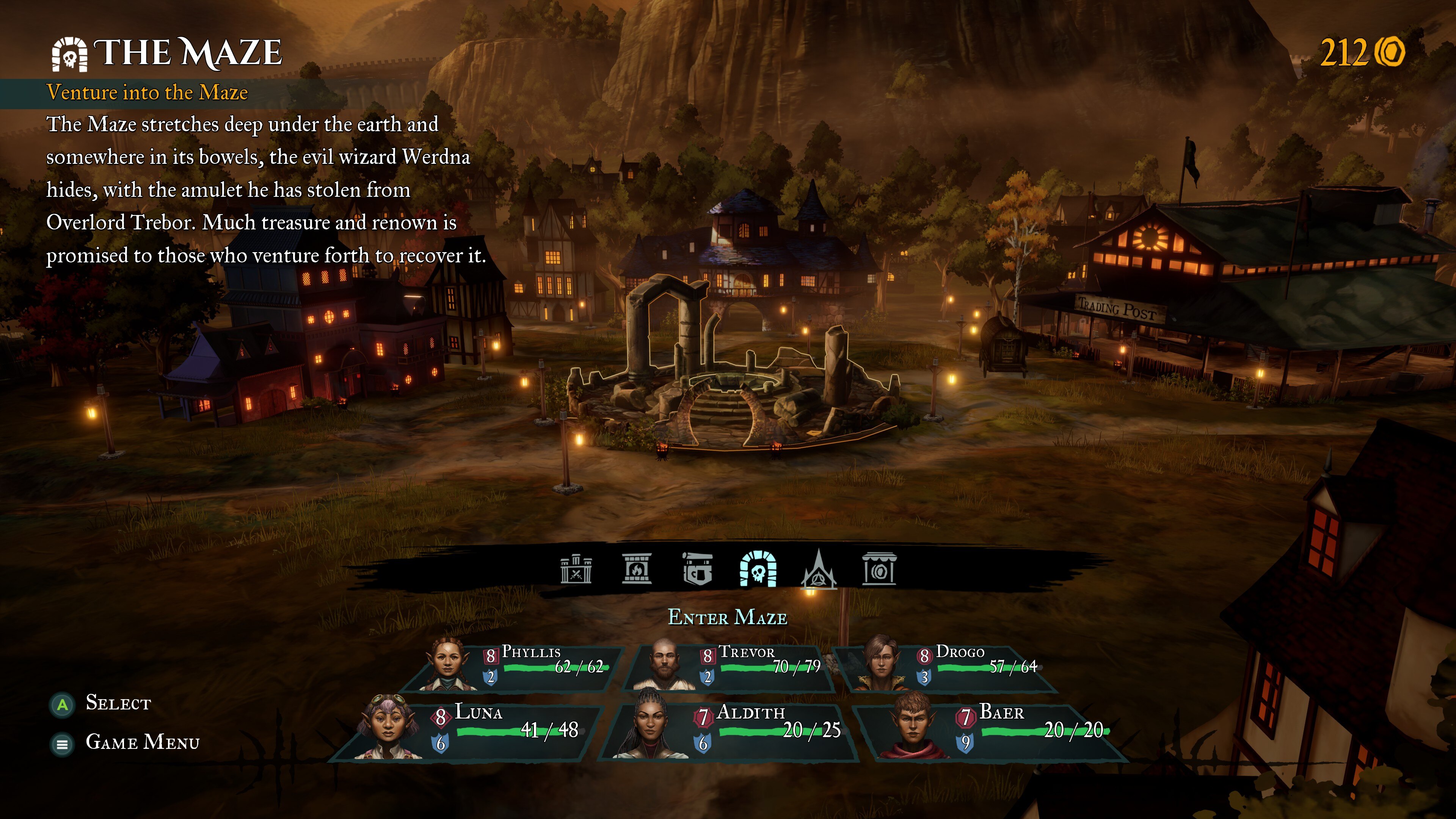
Poking around in forum discussions, I found there were just as many people talking up Wizardry as an infallible classic as there were saying it is a masochistic relic of the past.
I find myself landing somewhere in the middle. Wizardry is absolutely cruel. It can feel deeply unfair. It can also feel like a huge waste of time. But there is something sticky and compelling about it. Even now, while part of me is insisting there are better ways to spend my time, another part of me is wondering if I can push past my last full party wipe and delve deeper into the dungeon.
My biggest gripe with this remaster of Wizardry—and I imagine the thing that Digital Eclipse had the hardest time deciding on how to address—is how grindy it is. To really make progress requires leveling up a party in safe areas. Even venturing onto the second floor with a decently leveled party can result in a run of bad luck thanks to status effects like poison and paralysis. The result is that the common strategies for success involve leveling against easy, rewarding enemies on the first floor and then slowly advancing to level up even more.
A pair of ghosts in a secret room are the most rewarding enemies early on. However they have large health pools and your party has a habit of missing their attacks like 85% of the time. My best party, and my most successful run, was the result of mindlessly grinding on these ghosts for an hour or two using my Steam Deck and watching my wife play Hades II. You can imagine my envy in these moments.
After hours of carefully poking at the dungeon, revealing every nook and cranny of the early floors, and genuinely starting to have a great time, I took a single step towards real progress on the fourth floor. It ended up being my ruin.
I fought dragons. I bested groups of 18 enemies in a single fight. I felt like I was finally in a good spot, where a hard fight might just mean a trip back to town to rest, rather than an unexpected party wipe. Imagine my heartbreak when I opened a door and came upon what felt like an army of wizards and knights, and a lone samurai that could decapitate my party members, killing them in a single move.
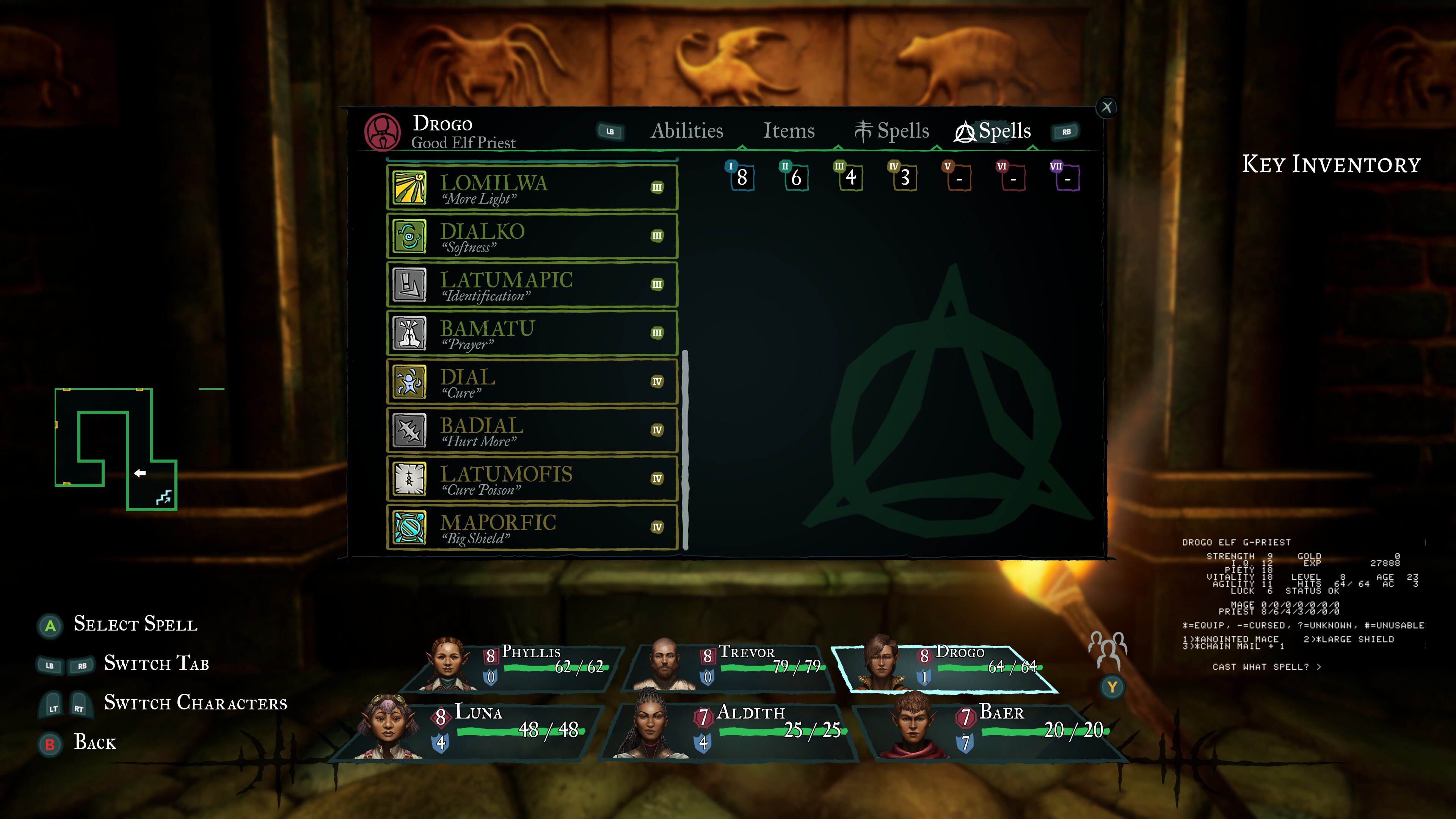
I knew it was too much. I knew I was in over my head now. I decided to run. Fighting was hopeless. I attempted to run at least 15-20 times before my entire party was decapitated by that asshole samurai.
This is all just part of the game though. Like a super hard boss that acts as a skill check in a Dark Souls game, Wizardry is full of brutal lessons. I later learned that the fourth floor fight is a notorious one, and the reward for surpassing it trivializes a lot of the early grinding.
But I didn’t win, and none of Digital Eclipse’s new features helped to mitigate the situation. A full party wipe means starting from scratch with a new level 1 party, or grinding enough gold in this new version to recruit a new party at or around the original party level. The ability to recruit instead of regrinding is a massive concession compared to the original game’s grind, but by today’s standards it is still pretty harsh.
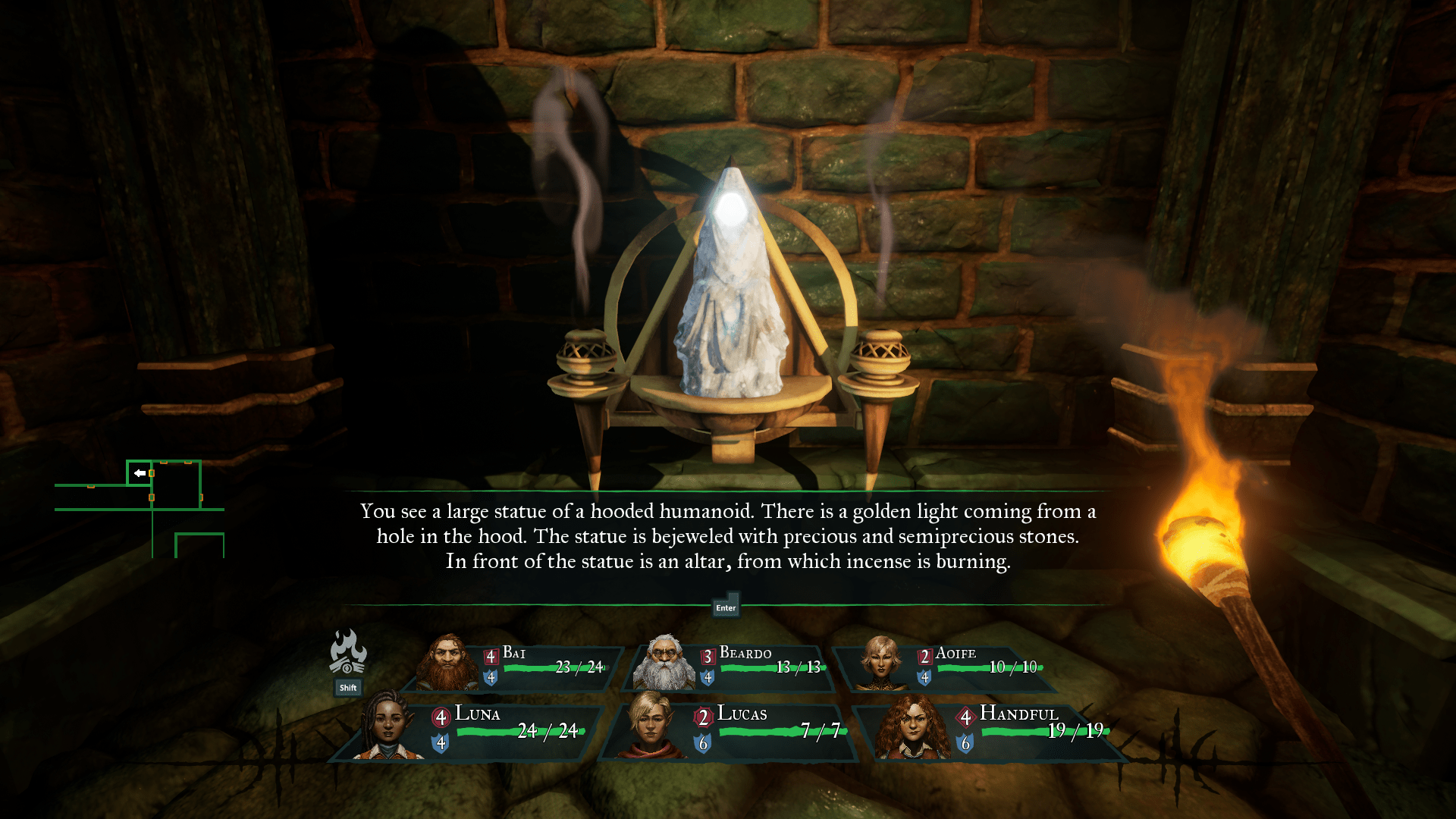
I suspect the goal here was to maintain the risk and reward of the original game. It’s hard to deny that the game builds up some tough consequences for failure that result in thrilling exploration. On the other hand, failure is so deflating that I suspect many modern players may simply never touch the game again after their first full party wipe.
Ultimately I think this remake’s difficulty options are a bit too conservative. With the default settings, which employ 100% of the new quality-of-life features, the game is still incredibly hard. Without them, it’s simply the type of masochistic difficulty that was typical of 1980s game design. It’s the kind of design that made Wizardry the only game a kid would need until Wizardry 2 came out.
The elephant in the room is that as influential as Wizardry was, it has kind of been left behind. Newer games featuring punishing mechanics still offer a ton of novelty and variety even when death sets you back to the start. Here, a bad run sets you back to that same first floor dungeon, with the same miserable grind to look forward to.
Settings that got you back into the action much faster might feel like a betrayal to old-school fans, and I suspect that was the fear here. But by refusing to include further sliders to make the game easier, the result feels like just enough to get modern players in the dungeon door before slamming a portcullis down on their feet.
Without more ways to customize the experience, or the kind of supplemental documentary-style material that Digital Eclipse has become known for, the window for enjoyment in Wizardry feels very narrow. There is definitely something intriguing about it, but if I run my newly-leveled group to that fourth floor and die again, I can’t imagine I’d have it in me to ever return for a third round.
 Red Ring Circus