
Alone in the Dark (2024) – Game Review
Back in 1992, Alone in the Dark pioneered the Survival Horror genre, before it was even called that. If fixed camera angles, static backgrounds, tank controls, and a maze-like mansion full of puzzles sound like all the ingredients for an oldschool Resident Evil game, that’s because the original Resident Evil took massive inspiration from this cult classic.
While Alone in the Dark is remembered, it ended up as more of a springboard for Capcom, a first draft for the classic they’d ultimately make a few years later. Resident Evil would go on to reinvent itself, inspire entire genres multiple times, and remain relevant and successful until today. Meanwhile, Alone in the Dark would get pulled out of retirement every 5-10 years to mixed results.
That said, the latest attempt undeniably looked to have potential. 2024’s Alone in the Dark is an attempt to remake and reimagine the original game in much the same way that Capcom transformed Resident Evil 2 from a tank-controlled relic into a thrilling over-the-shoulder horror masterpiece. But while Resident Evil 2’s remake lovingly modernized the 1998 original without losing its identity, this Alone in the Dark remake deviates wildly from the original within the first 30 minutes.
The first Alone in the Dark is a very short game, especially if you play with a guide or already know about all of the trial-and-error elements. Today it feels more like an artifact of its time, more influential than truly classic in and of itself. That said, it does have a very particular charm to it. Over the course of a few hours you’ll fist-fight zombies, swashbuckle with a laughing pirate, dodge projectiles from a magic painting, and run from angry ghosts. Story is told through notes and book excerpts, complete with extremely overwrought voice acting reminiscent of the live-action goofiness of other games from that era like Myst and Command & Conquer.

From the start you select between two characters, Edward Carnby and Emily Hartwood, who have their own motivations for coming to Dercerto manor, but exist in parallel timelines. Like the original Resident Evil, Alone in the Dark treats character selection as a bit of a sexist difficulty selection. Emily gets some breathing room to explore and gather some weaponry before monsters attack, while Edward is immediately assaulted by zombies and toothy, bouncing dog creatures.
The game sticks to its namesake too. While you explore the manor, solve puzzles, and delve deeper and deeper into its secret, Lovecraft-inspired depths, you never meet anyone but monsters. Outside of the notes you find, it’s all environmental storytelling. A secret stairwell reveals an underground cave full of fishmen and a giant worm. Much like the reveal of the creepy basement laboratory in Resident Evil, the real Cthulhu shit isn’t found until you venture underground.
I’m explaining all this because I played the original Alone in the Dark for the first time yesterday. Despite being a big Resident Evil head since I was a literal child, I never played the game that inspired it. I knew the pedigree, I knew it set the foundation for Survival Horror, but I never knew how absolutely weird and charming it was.
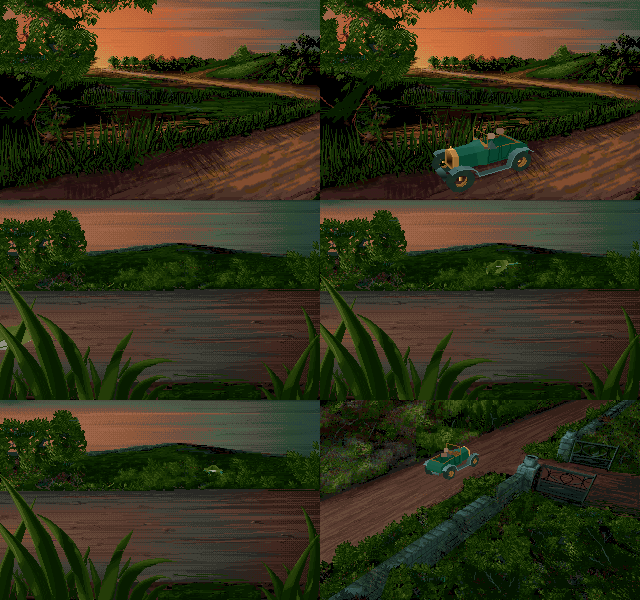
The new remake certainly didn’t carry over much of that weird charm.
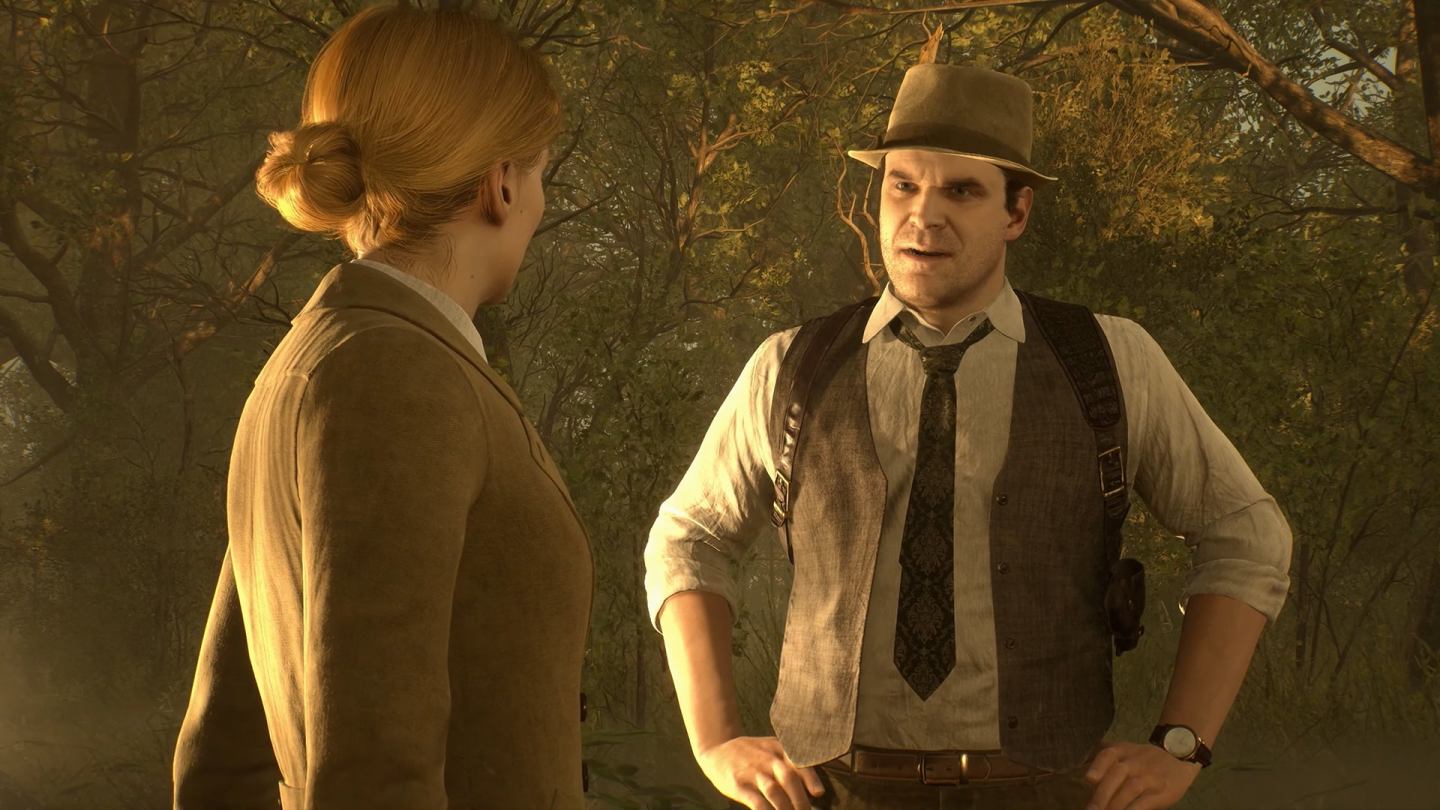
Alone in the Dark 2024 takes things from the original but fails to capture the feeling in any real way. The opening cutscene has you driving up to Derceto manor (there’s a frog! Just like in the original!) and it has a version of the shot from the window as you approach (minus the creepy hands or anything ominous really). You then select between playable characters Edward Carnby and Emily Hartwood, this time portrayed by famous Hollywood talent (David Harbour and Jodie Comer), their voices and likenesses on full display.
They’re here to find out what’s going on with Jeremy Hartwood—like in the original game—only this time he is a walking, talking character. In fact, Derceto is now a home for the mentally ill (of course) and is full of a talkative cast of characters. You are, in fact, very rarely alone in the dark here. It makes sense, considering the actors on call you don’t want them to be mute for the entire game (only Hideo Kojima would be so bold), but it also shines a light on how easy it is for games to still stumble with storytelling and performances.
We’ve come a long way in portraying emotional depth in modern games, but only the most expensive of AAA productions can pull off the kinds of performance capture stories we see in The Last of Us, Red Dead Redemption 2, or God of War. Alone in the Dark still has some of that “phoning-it-in” stink you used to get when real Hollywood actors would do voice acting for the movie tie-in games. I bet the cast probably put in a ton of work, but most likely thanks to the direction they were given the end result feels a lot like L.A Noire—distractingly famous people’s faces stapled onto polygon bodies that bounce wildly between sleepy delivery and unexpected scenery-chewing.
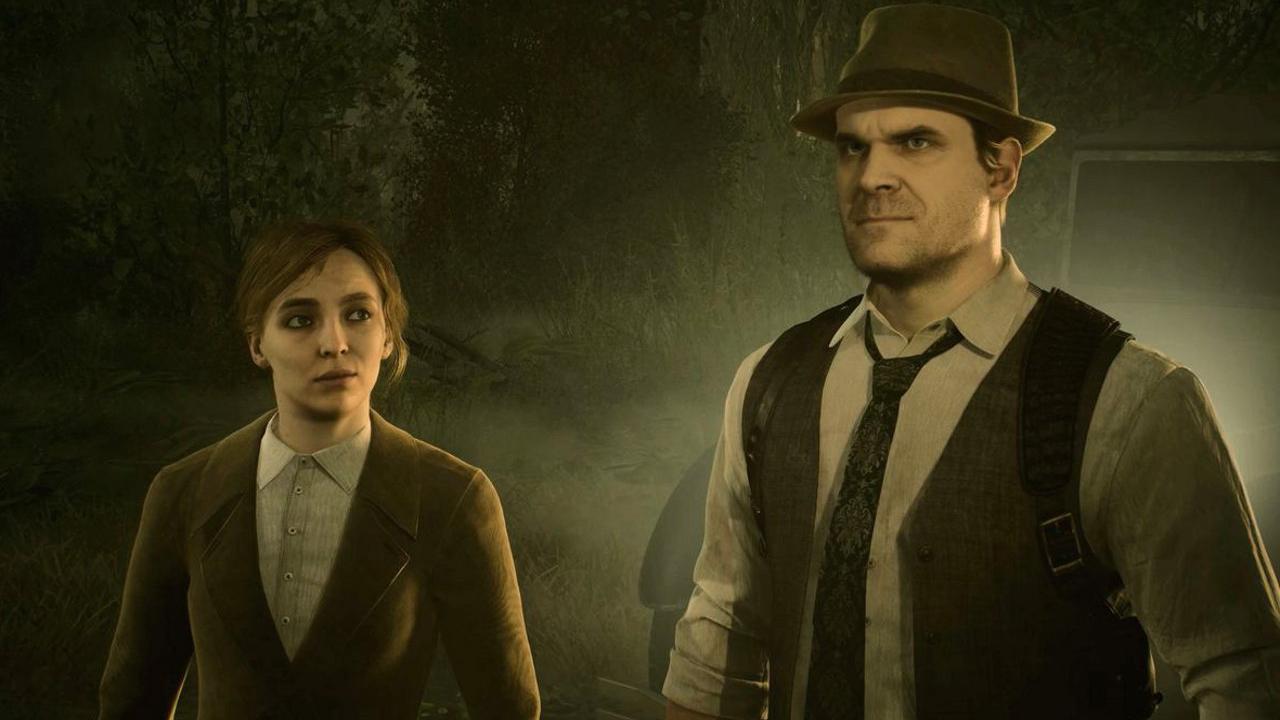
It doesn’t help that the storyline is nearly impossible to follow outside of the broad strokes. It doesn’t seem interested in taking the audience along for the ride. Your protagonist comes to realizations and says them out loud, as a matter of fact, without the storytelling actually earning these moments. The end result is a game that lacks a sure hand and focus, as if many different scenes were made and then haphazardly stapled together at the last minute. Individual moments can be great and enthralling, but they’re usually followed by another scene that’s poorly executed, undoing whatever good will the game manages to garner.
As I made my way towards the finale, I couldn’t help but think of other semi-recent Cthulhu-inspired games, like The Sinking City (2019) or Call of the Cthulhu (2018). This new Alone in the Dark has more in common with those than the original game. All of these mid-budget Lovecraft games all seem to follow the same broad strokes and come away as lesser experiences by owing their ideas to a long-dead racist author.
Don’t get me wrong, I think fish men, tentacle gods, and unknowable horrors are all super cool ideas! I would love it if more games would explore horror that goes in an otherworldly direction. But H.P. Lovecraft’s stories are fiction just like the rest of it, so I don’t really understand the subservience to this particular man’s mythmaking. If you can get around the blatant racism, the books can be interesting reads, but you know what else is cool? Bloodborne! That game managed to be “Lovecraftian” without making direct references to made-up gods that contain obvious slurs in their names. Let’s take the cool ideas, and leave the racist asshole’s intellectual property at the door.

You could argue that the original Alone in the Dark took direct inspiration from Lovecraft as well, but that’s kind of my point. 2024’s Alone in the Dark picks the wrong things to pull from the original. It doubles down on the racist gods, a villain known as “The Dark Man”, and long looooong diary entries and book pages.
Playing the modern game and the 1992 original back-to-back, I found myself wishing they’d focused more on the weird, colorful take on horror that the first game suggested. I would kill to see David Harbour swashbuckling with an undead pirate, or Jodie Comer taking down ghost paintings with a bow and arrow and a cleverly-placed rug. I’d be okay with far fewer characters too. Perhaps, these expensive actors would simply talk to themselves a lot, or read aloud the various notes and pages scattered around the mansion. Remember above when I said the original game evoked the energy of the live-action elements of other 90s games? In a post-Alan Wake II world, why not lean into that?
This new Alone in the Dark, despite owing its existence to a wacky, short and sweet horror game from the 90s, chooses to fall victim to the pitfalls of modern game design. The colorful edges are sanded off in favor of tired horror tropes and soulless monsters. The game talks way too much, expecting you to hang on to every word even when half of it makes no sense. The presentation is a layer of polish and impressive technology that falls apart at the lightest touch. Glitches and control issues in Alone in the Dark feel like walking into the developer’s pristine bedroom, only to open the closet and be buried under a pile of soda cans.
The end result is a game that gives off the same energy that the game industry seems to be brewing nowadays. It feels tired, standardized, and safe. I don’t think you should run out and play the original game instead, it’s still a kind of terrible video game by modern standards. But I can’t deny I felt the excitement and energy of the creators behind it. And even as I struggled with the harsh controls and unforgiving design, I felt invigorated and excited in a way that the 2024 game couldn’t hope to match.
 Red Ring Circus