
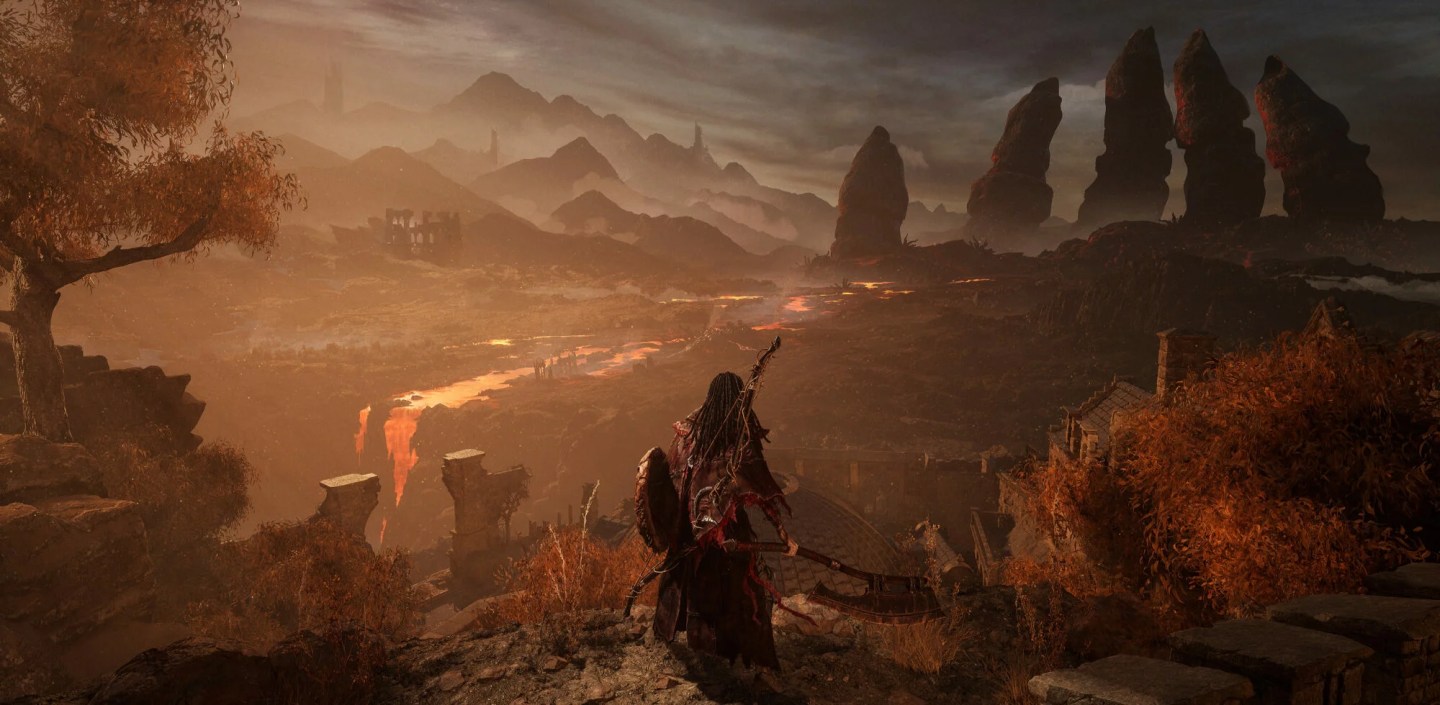
Lords of the Fallen (2023) – Game Review
Well, here I am again, back on my bullshit. It’s the end of 2023 and we have not one, but two high-profile Souls-likes in a year without a major From Software entry in the genre. Typically, when everyone is talking about the latest Dark Souls, Bloodborne, Sekiro, or Elden Ring, I find myself championing some off-the-beaten path copycat.
Last year, I didn’t write about it too much here, but that game would have been Steelrising. While everyone was wrapping up their 100+ hour Elden Ring runs, I took a months-long break from it. I ultimately finished, loved, and crowned Elden Ring as my game of the year, but there was a good chunk of time where I ignored it completely in favor of Steelrising’s scrappy gameplay and wild alt-history automaton-riddled Paris. Before that, I wrote at length about being so deep in the Souls-like genre that I found things to love about underdogs like Mortal Shell and The Surge 2.
So, of course, in a year where one of the biggest hits is Lies of P—a Souls-like that is generally considered one of the best—I find myself being a total contrarian and recommending a totally different game: the new part-remake/part-sequel, Lords of the Fallen.
Now if you’ve followed Metacritic or the general sentiment around these two games, you might think I’m really burning my credibility here. And from what I can tell, Lords of the Fallen launched in a pretty sorry state. The game that reviewers played was riddled with performance issues and game-breaking bugs. Thankfully, only a few months later, the game has been patched several times. It seems that the developer is serious about supporting this game for the long haul.
This 2023 version of Lords of the Fallen has very little in common with the original game outside of its dark fantasy vibes and some small callbacks. With the original development team moving on to other games like The Surge, The Surge 2, and this year’s Atlas Fallen, the new Lords of the Fallen went through some development woes before finally falling into the laps of a new studio, HexWorks.
It would be fascinating to learn more about that development journey, but needless to say, HexWorks approaches this new game with their own ideas. The result? A game that owes a massive debt to the Dark Souls franchise but also establishes its foundation with some core ideas that set it apart.
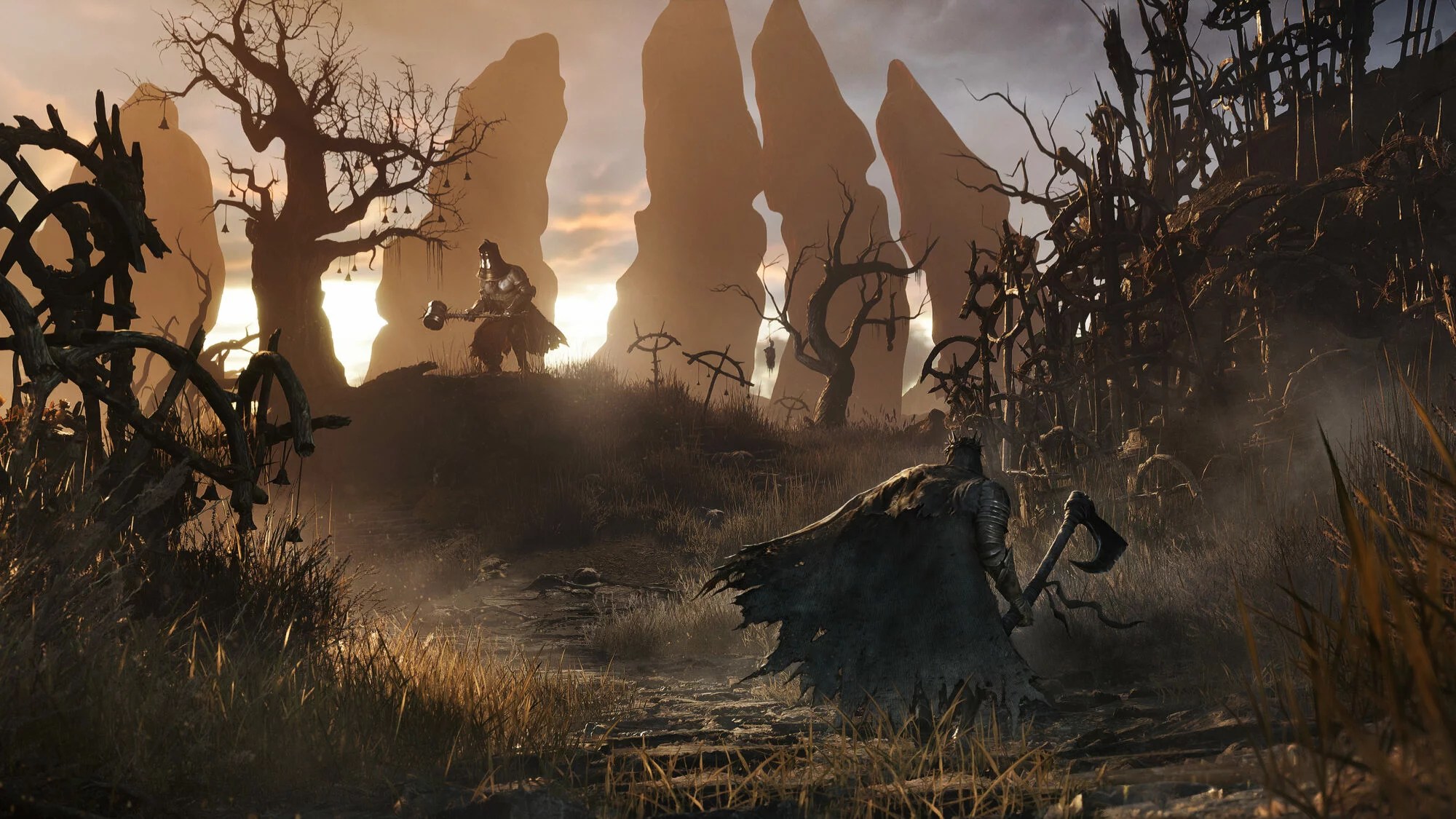
One of the loftier goals for Lords of the Fallen comes courtesy of a quote by Hexworks executive producer Saul Gascon. In an interview with Edge Magazine, he explained that their target was to make something that felt like “Dark Souls 4.5”. A studio not called From Software calling their game “Dark Souls 4” would be ambitious enough, but that extra “.5” really makes the quote seem absurd. That said, I’m not sure what’s more ridiculous, setting that high of a bar as a brand new studio, or how close HexWorks actually got.
Now don’t get me wrong, there are a lot of little flaws and differences that set Lords of the Fallen apart from Dark Souls, and your sense of how close they got may vary depending on how much of a FromSoft super-fan you are. I’ve seen plenty of people who love this genre write this game off because its particular stew didn’t work for them, or worse, they played it in that early launch window where the game was a genuine mess. But, for me, this really did feel like an evolution of Dark Souls with some rough edges.
The level design, in terms of Dark Souls-y things Lords of the Fallen lovingly apes, is the star of the show here. Mournstead is an intricate and dangerous world that always offers some goal in the distance, but makes it challenging and satisfying to reach it. Of course it does that classic Dark Souls thing where the path loops back around to a previously locked door, returning you to safety before a big boss fight, but here it feels more natural and earned than just about any competing game in the genre.
It also frequently tempts you to push a little bit further along thanks to a bunch of different levers in the game design. This game’s equivalent of the Dark Souls bonfire safe point is called a Vestige. The primary Vestiges in the world are few and far between, sometimes feeling a bit unfair in their placement.
The game accounts for this through a consumable item called a Vestige Seed, which allows you to place a single temporary Vestige in specific spots littered throughout the world. These spots are littered between tough encounters and placed before boss fights.
The problem is that you can only ever plant a single Vestige of your own, and they are a limited resource. You can buy them at the game’s hub, but they cost Vigor, the same currency you use to level up, upgrade weapons, purchase armor, and so much more.
This creates a decision point where you’ll travel a decent way from a Vestige, gather a huge stack of Vigor, and hit a patch where you can place your own Vestige. You’ll think, “Is this really the right time? It doesn’t look like there’s a boss ahead, so maybe I could forge forward a bit more and plant a seed at the next patch.” Maybe the gamble pays off, or maybe the next enemy is just out of sight and kicks you off of a ledge, killing you and taking all your Vigor with them.
But the gamble is usually even more interesting than that thanks to Lords of the Fallen’s central mechanic. You play as a Lampbearer, a warrior that can die over and over and be reborn, but can also use their lamp to peer into a dark version of Mournstead known as the Umbral realm. The Umbral realm is essentially a second version of the game’s world layered on top of the normal world. It has different features—bridges where holes exist in the normal world, open doors where gates block your path, and a unique set of enemies hiding in wait.
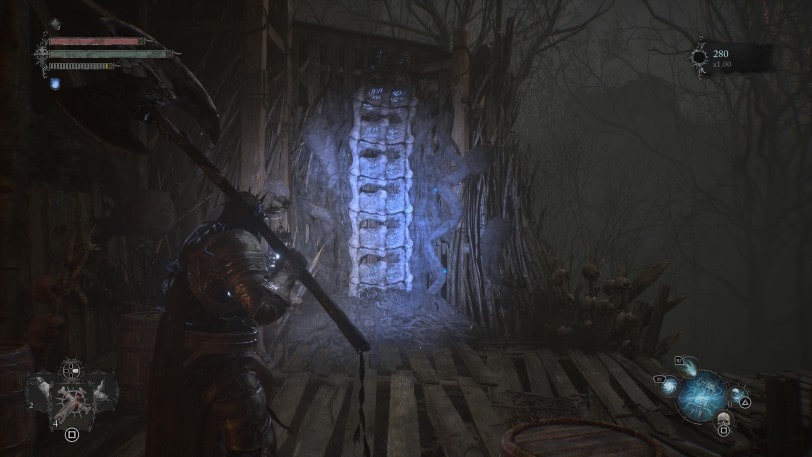
You can hold your lamp up and peek into the Umbral. This allows you to cross those Umbral-only bridges or open doors, but you’re still dipping a toe in the Umbral for that brief time. That means if an Umbral enemy wanders into your path and smacks you, you get ripped out of the real world and cast into the Umbral.
The Umbral also serves as a sort of second-chance mechanic in typical gameplay. Die in the real world and you continue on in Umbral. Everything is harsher there—small weak enemies materialize into the environment constantly to pester you, healing items aren’t as effective, and you’re on a timer—stay in Umbral too long and a red grim reaper-looking asshole will relentlessly chase you and kill you in one hit.
You can escape the Umbral through emergency effigies—once per life statues in the world that crumble upon activation and take you back to the real world.
All of these mechanics—the temporary Vestiges, the Umbral world you can fall into and escape, and the push and pull of consumable or one-time use items—come together to make exploration devilishly engaging. I fell into many unintentional late nights with this game because of the combination of level design and the push-and-pull of these systems. The layers of escape hatches and second chances make it that much more fun and rewarding to take risks, push a little bit further, and gamble with your life to make some extra progress.
While the close quarters combat is a fairly accurate rendition of the Dark Souls formula, Lords of the Fallen makes some smart changes to long-range combat and magic. Throwable items in Dark Souls can often feel like a waste. You’ll naturally come across maybe four or five of something like a “Rope Black Firebomb” and then hoard them for hours until you throw them in a desperate attempt to kill a tough boss or finally unlock the option to buy as many as you need. In Lords of the Fallen each throwable item, arrow, or crossbow bolt is an infinite use item you only need to find once. Instead, your long-range combat is limited by a general “ammunition” bar that can be replenished through ammunition pouches and satchels.
This makes long-range projectiles and magic a core part of the gameplay. Any class or build can make use of at least some form of long-range combat. It also controls pretty well and is always easily accessible through the touch of a button. The lock-on system can be pretty temperamental and frustrating at times, but pairing it with long-range attacks can allow you to whittle down larger groups or take pot-shots at bosses between large attacks.
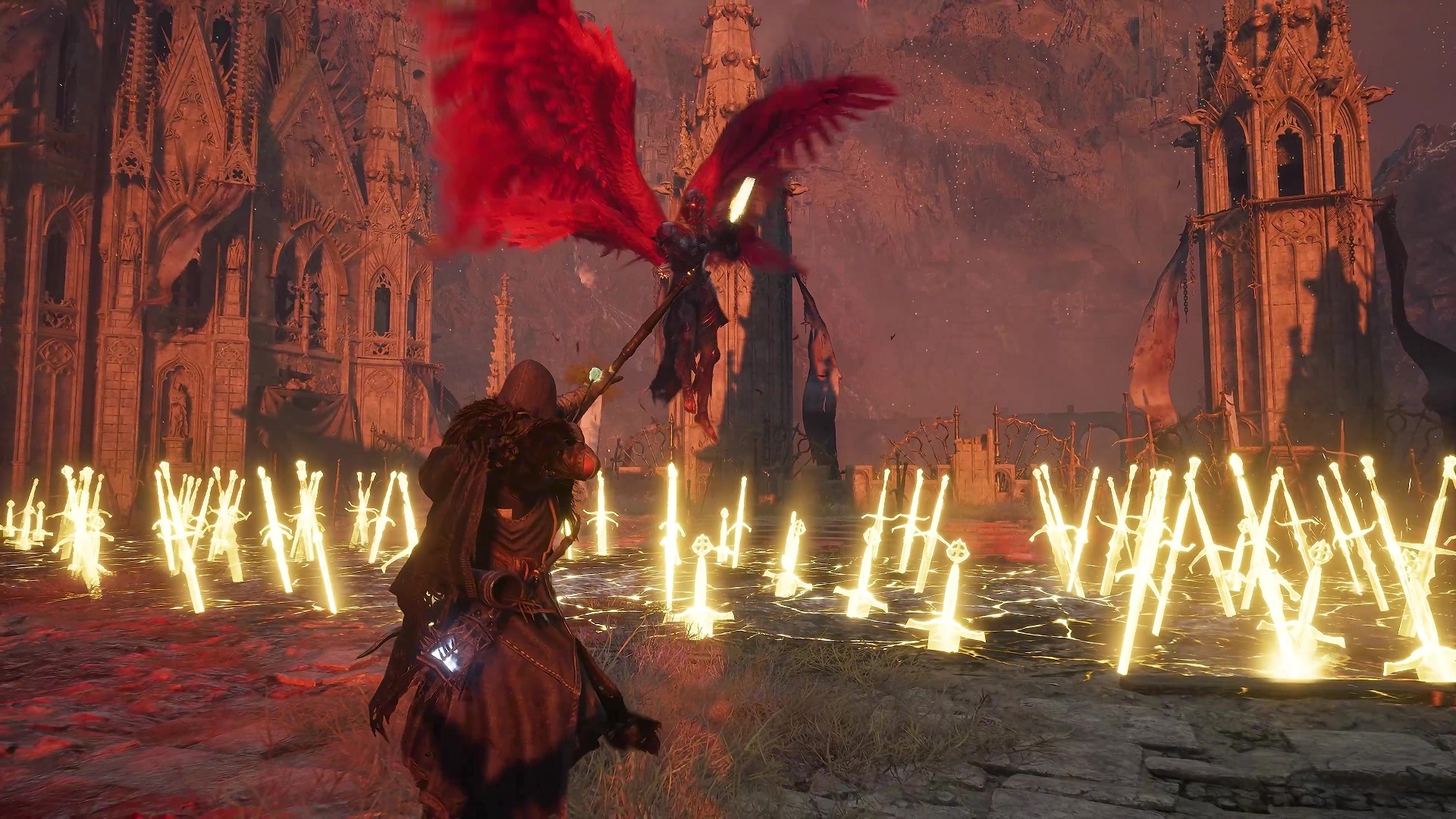
Speaking of bosses, Lords of the Fallen strikes a balance of difficulty that I found to be very satisfying. The boss design here is arguably one of the game’s biggest departures from From Software’s current boss design and challenge, but the differences feel subtle in practice. There’s a good mix of big dudes with swords, giant monsters, and more gimmicky fights—HexWorks hits all the hallmarks here in terms of visuals and vibe. The big difference is in meeting the challenge of the bosses and learning their mechanics.
A lot of the bosses in Elden Ring were such a response to the practiced player-base of these games that they could feel extremely arduous to defeat on your own. Attack wind-ups were over-tuned to be tricky and confusing, with a single boss out of the dozens you face having a swath of attack patterns and multiple phases. For a small subset of players, this challenge was the dream. For myself it was more fun to summon a group of friends and brute-force them together. The challenge was often too time-consuming to feel worthwhile.
In Lords of the Fallen, boss design feels more like a clean slate. Attacks are clearly telegraphed, patterns are easy to learn, and the dodge roll is pretty forgiving. Even parry attacks, something I’d never even attempt in Dark Souls, feel doable in some of these fights. Bosses here aren’t easy, but I believe they are quickly learnable and digestible for a wider range of players. It was incredibly satisfying to see my clear progress with each attempt of a challenging boss here. Oftentimes everything would click into place in my winning attempt, and I’d come away with barely a scratch.
Lords of the Fallen comes together into a winning formula that makes its remaining flaws easier to ignore. Yes, there are still some technical issues. And yes, there are still some core flaws (like limited enemy variety) that keep it short of that “Dark Souls 4.5” claim. But I honestly had a really great time with my 40 hours in Mournstead. While I’ll always celebrate a Souls-like that makes big departures in terms of settings, storytelling, and aesthetics, Lords of the Fallen gets so much right and does enough differently that it’s equally worth celebrating, even if it’s a shameless Dark Souls copycat.
 Red Ring Circus