

Slay the Princess – Game Review
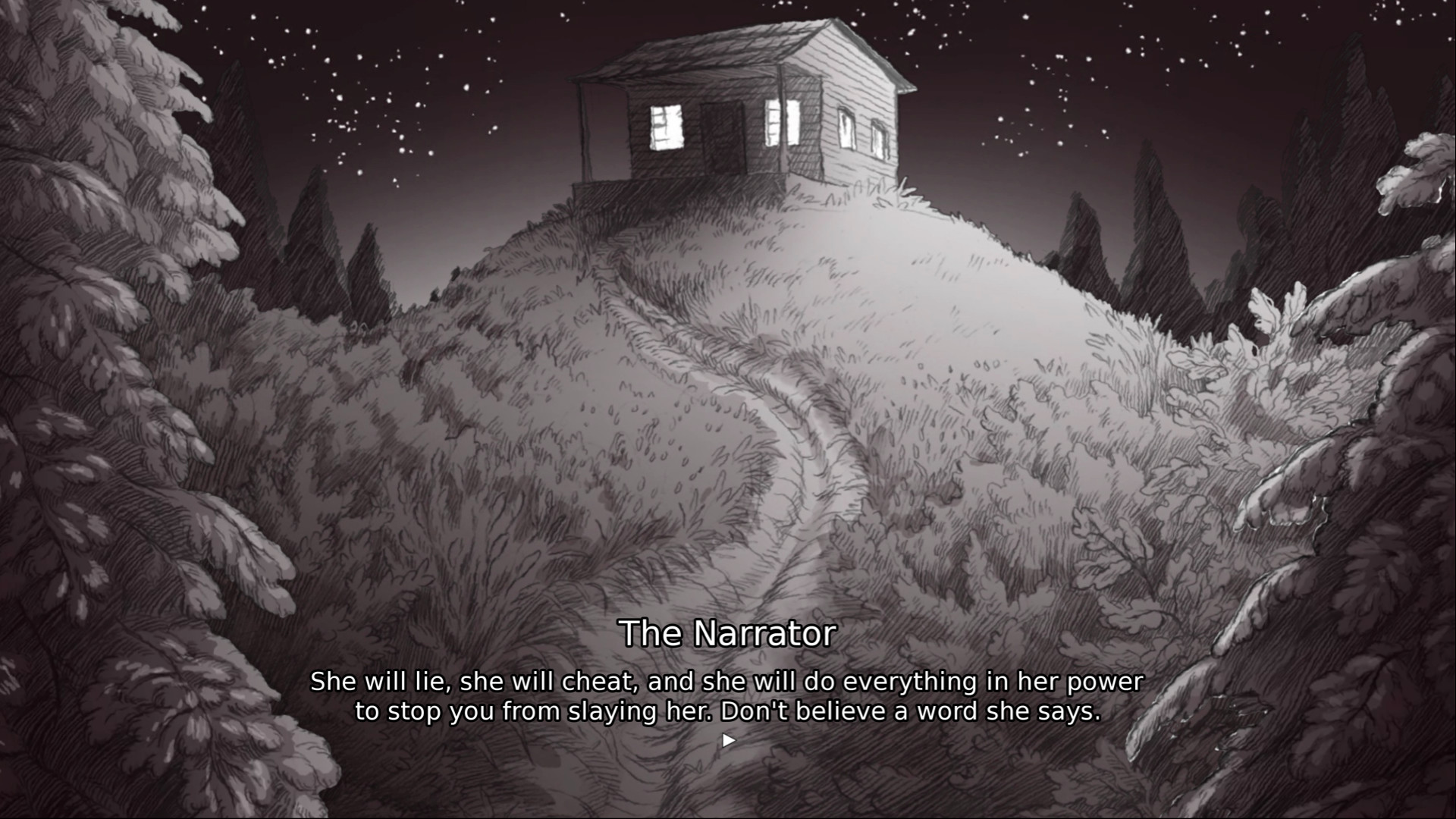
Slay the Princess opens with an odd, but simple premise. A narrator explains the situation: beyond the forest is a cabin, within the cabin is a princess, and she will end the world if you don’t slay her. Seems simple enough, but this visual novel provides many dialogue options and branching choices. Within the first few seconds you can question the narrator, threaten to leave, or celebrate the opportunity to commit murder.
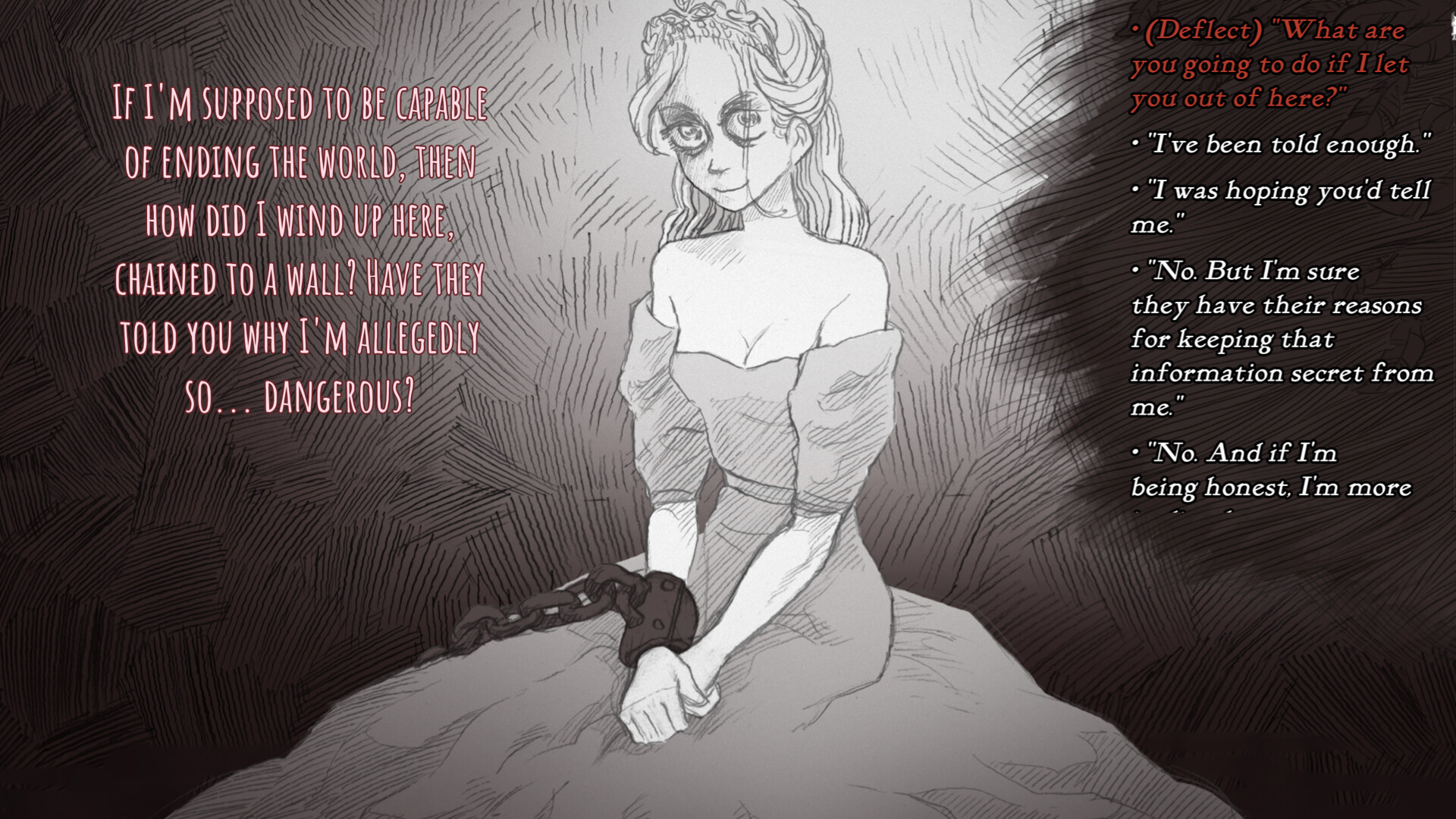
The heart of the game is the massive amount of choices you can make. I’ve never seen anything like the long, long lists of dialogue options available. At first, this allows you a ton of freedom to shape the narrative and generally respond in whatever way makes sense to you. Later on, it offers a ton of replay value, as the journey to slay or not slay the princess can branch in more ways than I managed to discover in my time with the game.
Like many visual novels, the appeal here is the storytelling and presentation more so than gameplay mechanics. In fact, compared to some of the more mainstream visual novels like Danganronpa or Ace Attorney, Slay the Princess does not have any traditional gameplay. It is strictly a game about making choices and seeing all the ways those choices branch out.
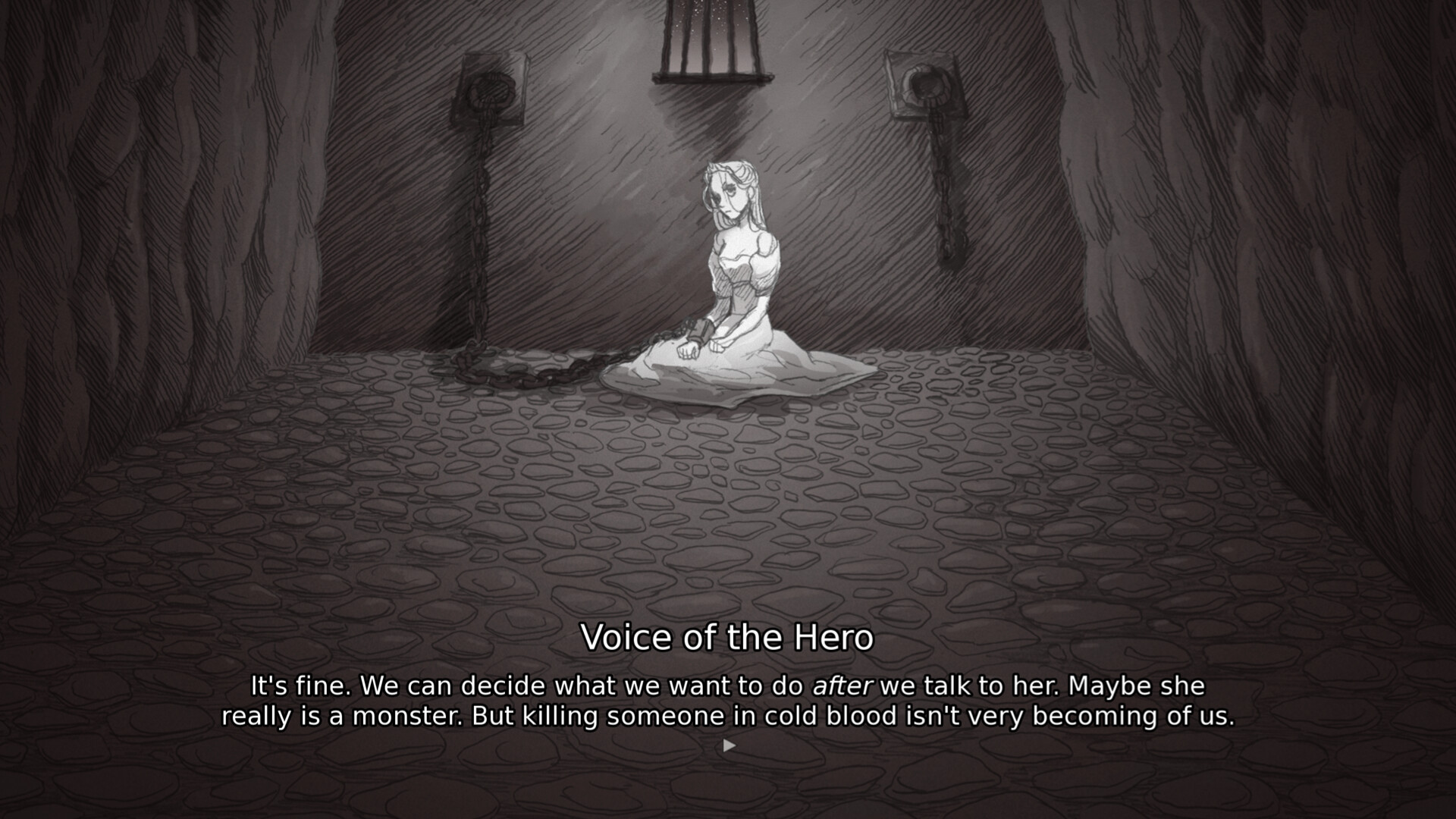
That might seem like a flaw, but I rarely found myself bored thanks to the fun voice acting and appealing hand-drawn artwork. The story has a real “I can’t imagine what will happen next” appeal to it that kept me engaged even though I enjoy the puzzle-solving and room-escape aspects of other games in the genre.
Slay the Princess is essentially a horror-comedy. Many of the branching scenarios are laugh-out-loud ridiculous, but they’re also very gory. The artwork is evocative and unafraid to portray blood, guts, and other twisted ideas. If you’re not the kind of person who is into jump-scares or gross-out moments, you may want to steer clear.
Shortly after your first attempt to slay or save the princess, you’ll get an idea of what the game is really about. You’ll have opportunities to replay sections and make new choices, seeing it play out in different ways with new consequences. This is a concept that many visual novels use. The Zero Escape trilogy of room-escape visual novels comes to mind. Those games’ branching narratives demand many replays and disable repetitive choices. There, the idea is to see every possibility in order to unlock a true ending.
Here, the branching paths and replayability are not quite as straightforward. While a single playthrough from start to credits will prevent you from making the same choices again and again, future playthroughs don’t seem to disable past choices. In my time with the game, this didn’t matter much, as even when I made the same choices over and over, the slightest difference sent me down a wildly different path with new art, new dialogue, and new situations. That said, I can imagine completionists finding the task of seeing everything Slay the Princess has to offer to be a bit tedious.
I also didn’t get the impression that there was any kind of true ending to discover. There are many wild paths in the journey to the ending, but the final sequence of Slay the Princess was more or less identical for me across four full playthroughs. It’s a bit of a shame too, because I found my first time through the grandiose finale to be a bit of a philosophizing-drag. I’d hoped repeat playthroughs would offer more enjoyable conclusions, but the story seems to converge into a handful of choices in the last act.
This was definitely a flaw for me, but it didn’t ruin the experience. This is a case of the journey being a lot more fun than the destination. I found a ton of fun and variety within the seemingly endless twists and turns the game offers, and having unlocked 41 out of a whopping 97 achievements, there was still much more to discover if I ever decided to start up a new run.
That variety was ultimately what I found so entertaining about Slay the Princess. Yes, there are some big ideas about the nature of storytelling, what it could mean to wield god-like powers, quantum physics, and that old favorite—the multiverse. That said, those big ideas didn’t endear me to the game nearly as much as its irrelevant mix of comedy, gore, and delightful artwork. It’s a game worth playing multiple times, even if its ending didn’t land with me.
 Red Ring Circus